
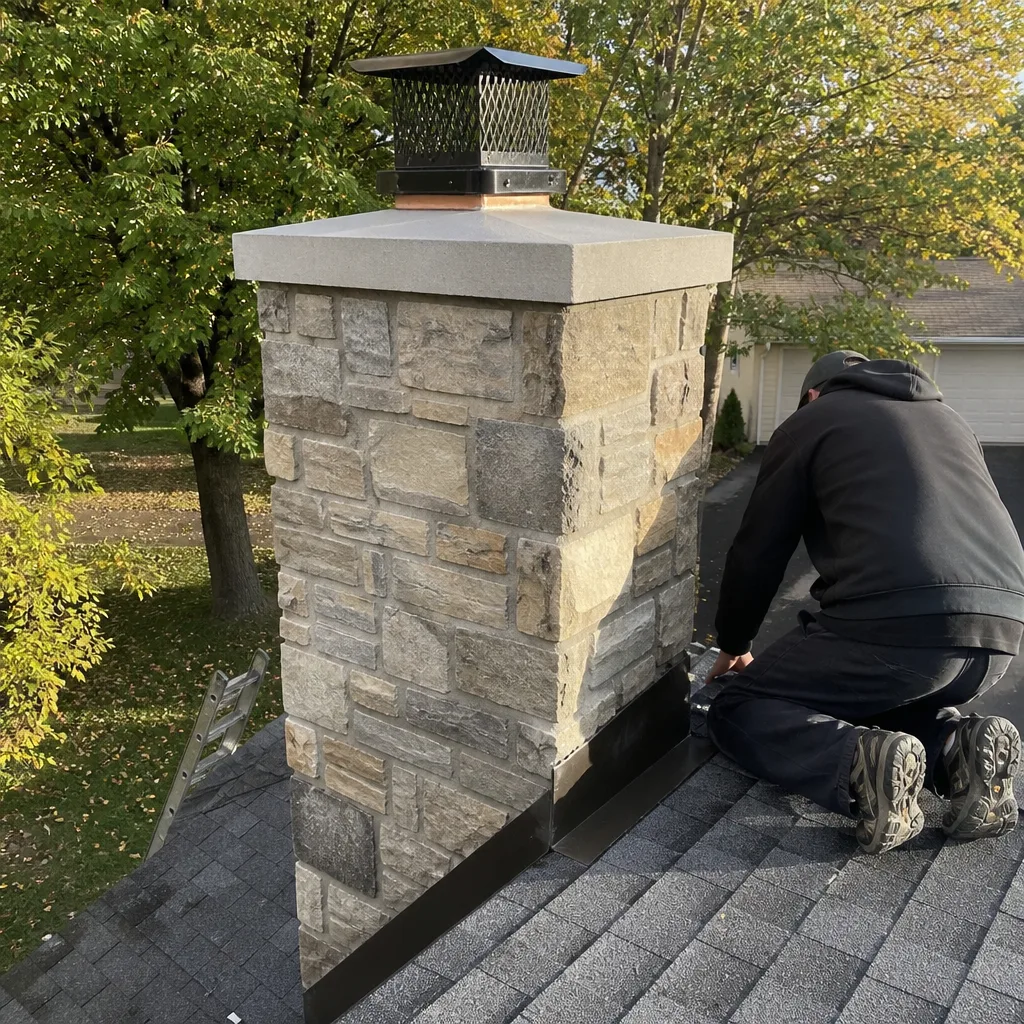
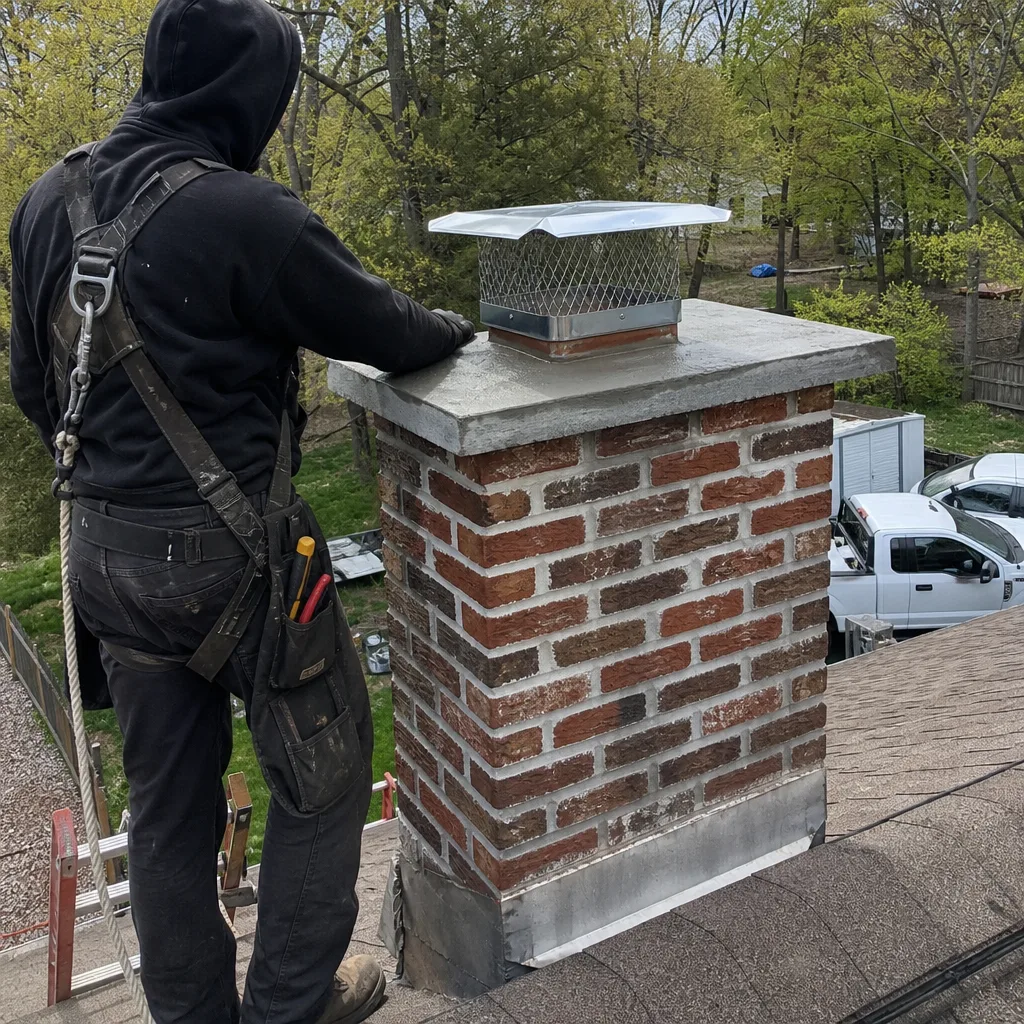
Level 1 sweep and inspection to the NFPA 211 annual standard - flue, crown, cap, and flashing checked and photographed
Chimney sweep logs do not sweep chimneys. They loosen some creosote - which then falls where a brush and vacuum still have to collect it.
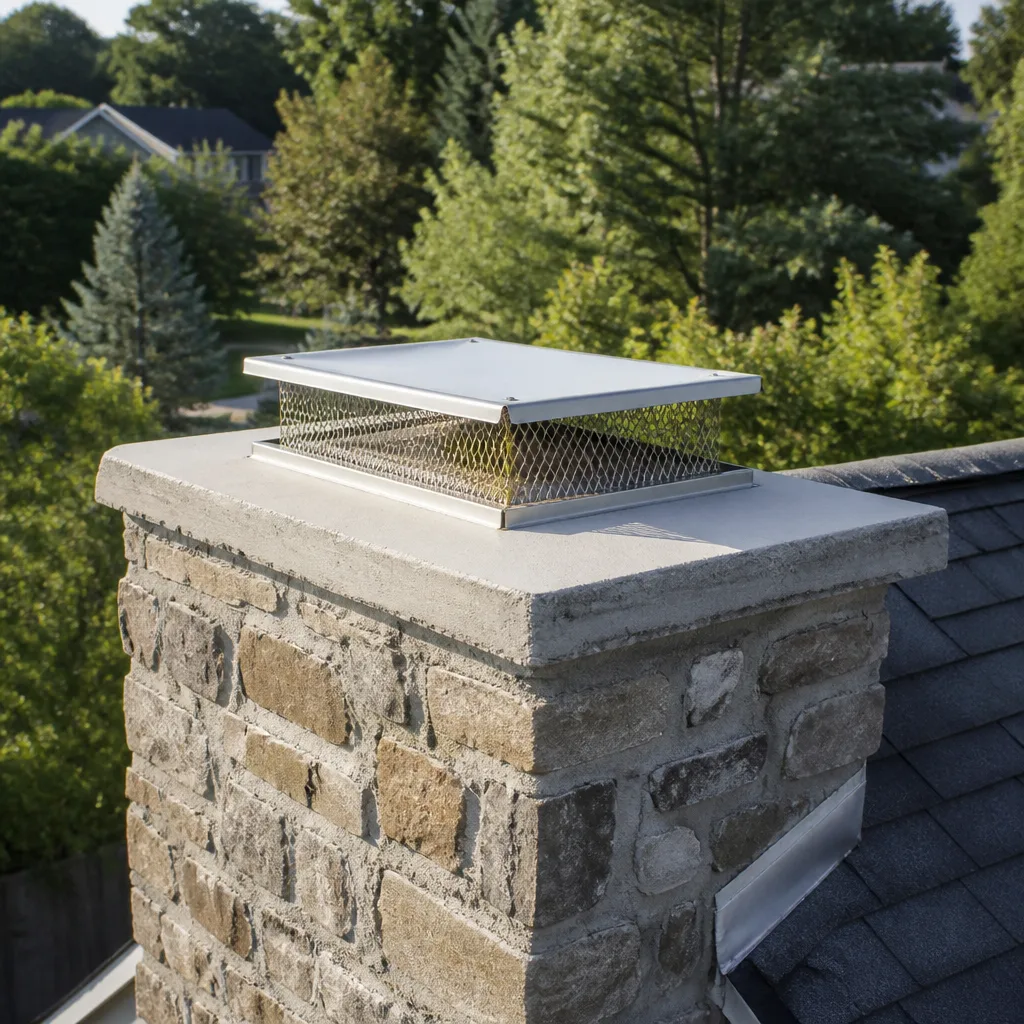
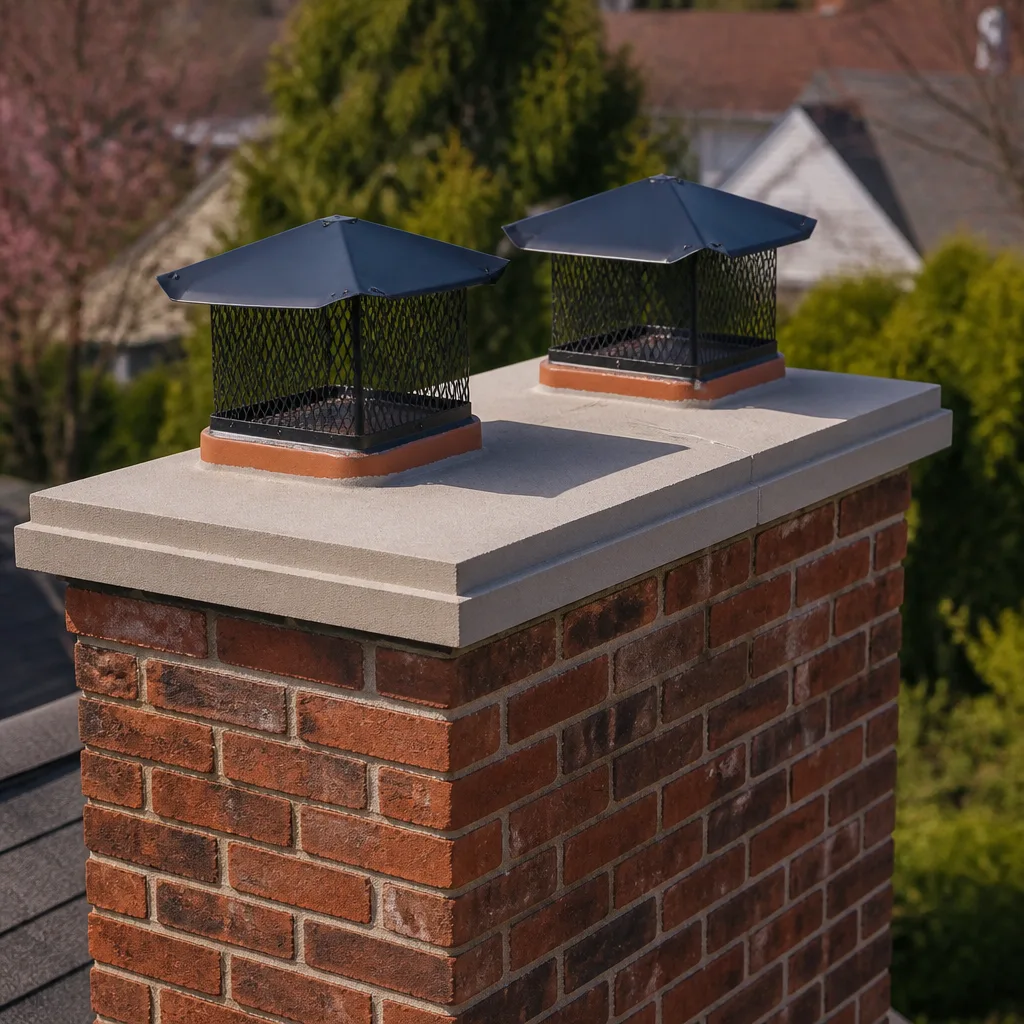
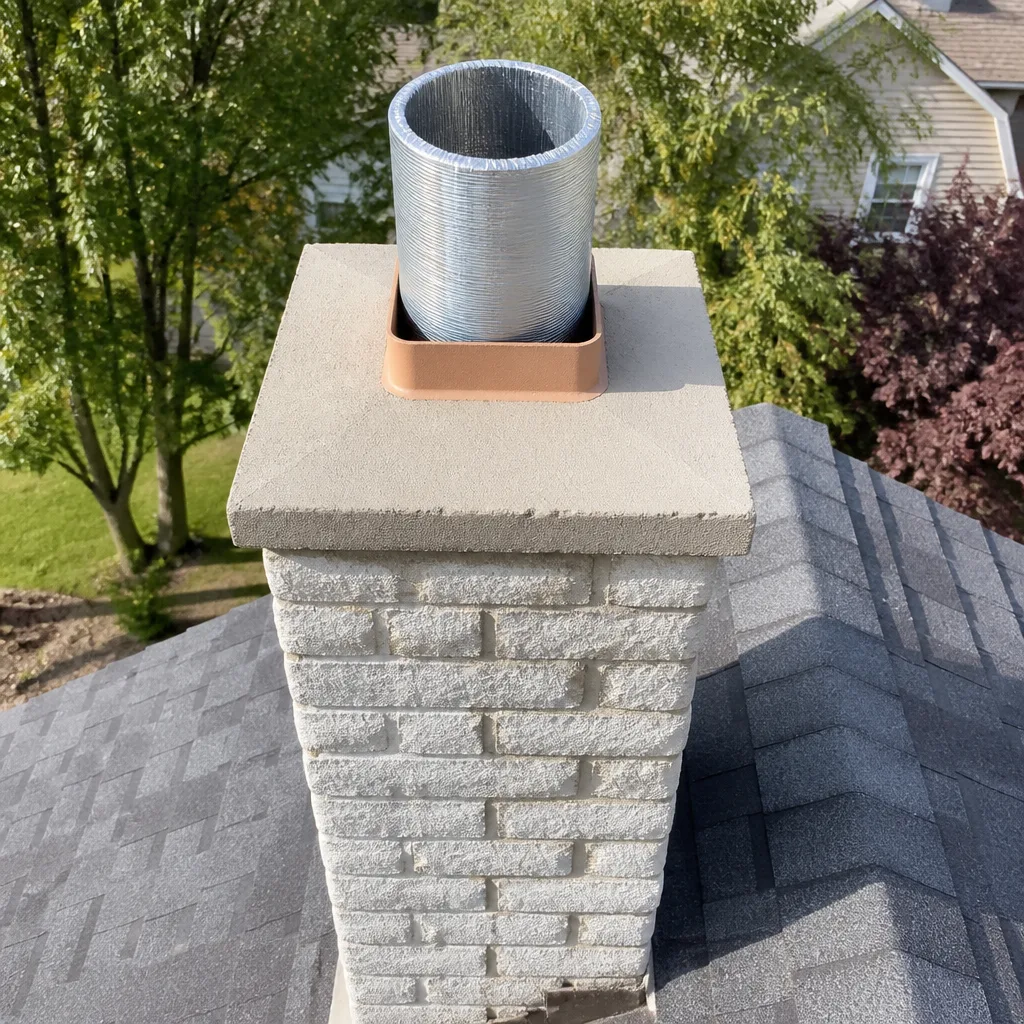
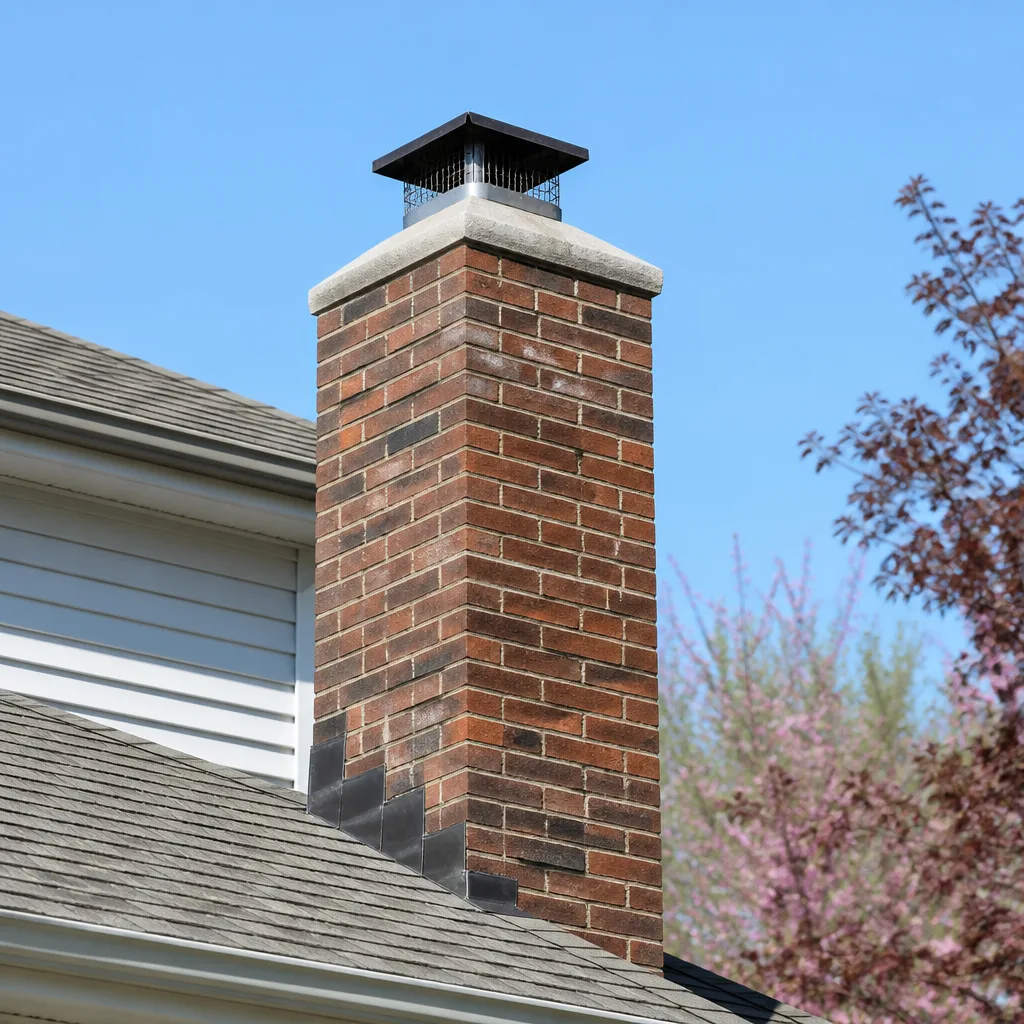
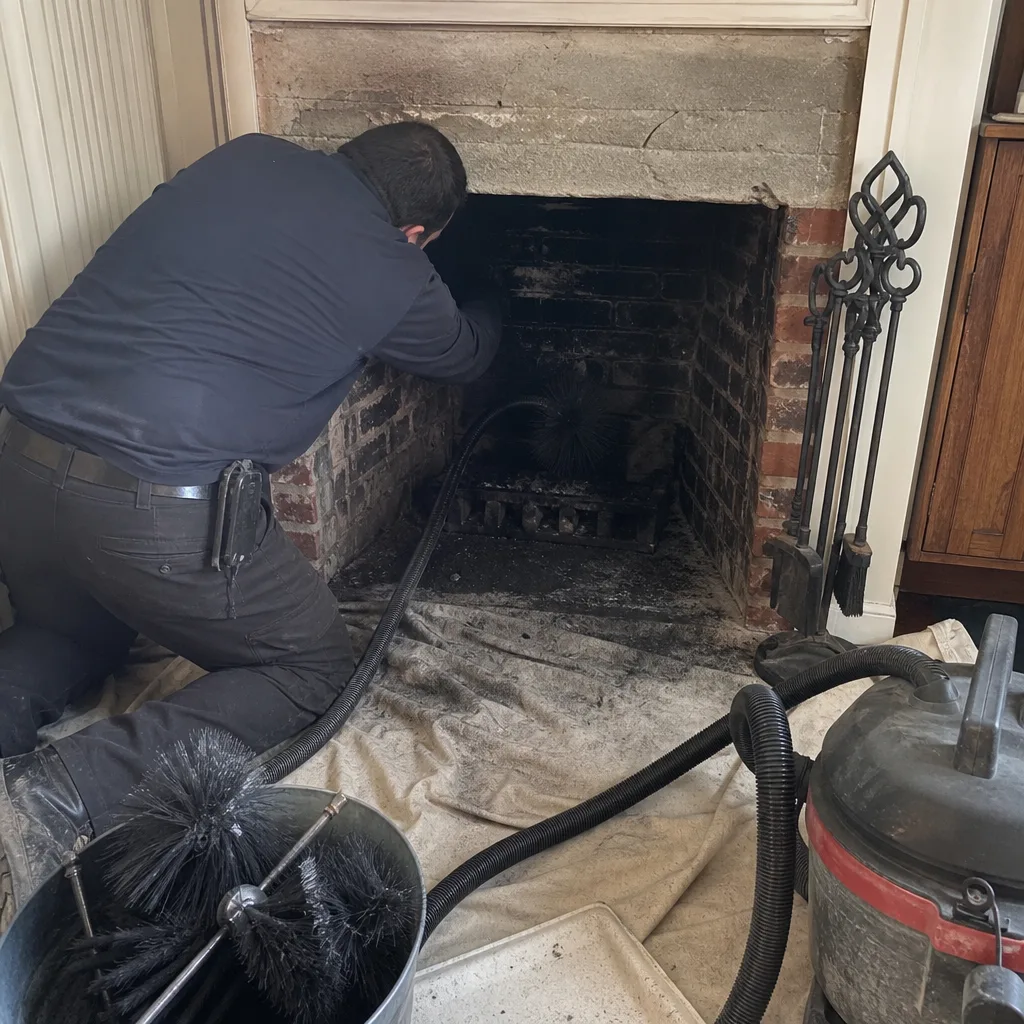 Before
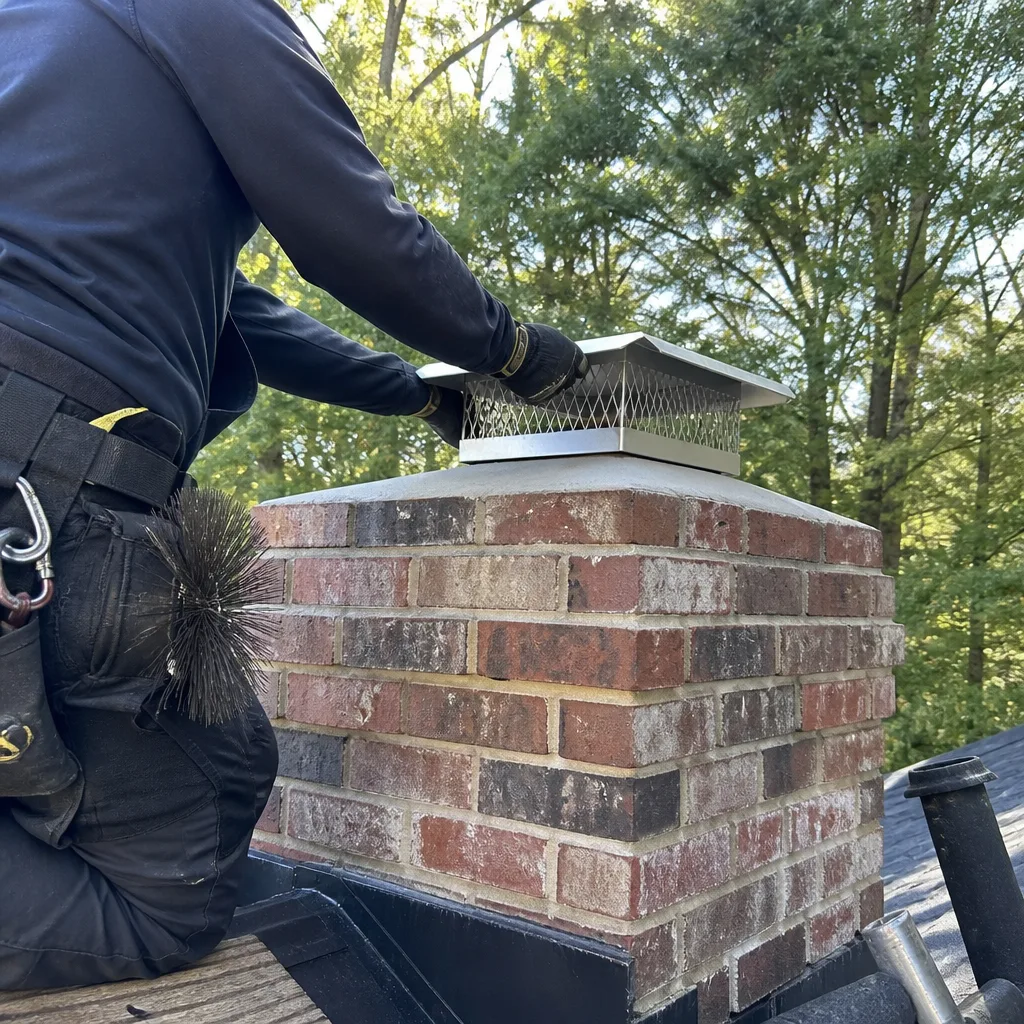 After
After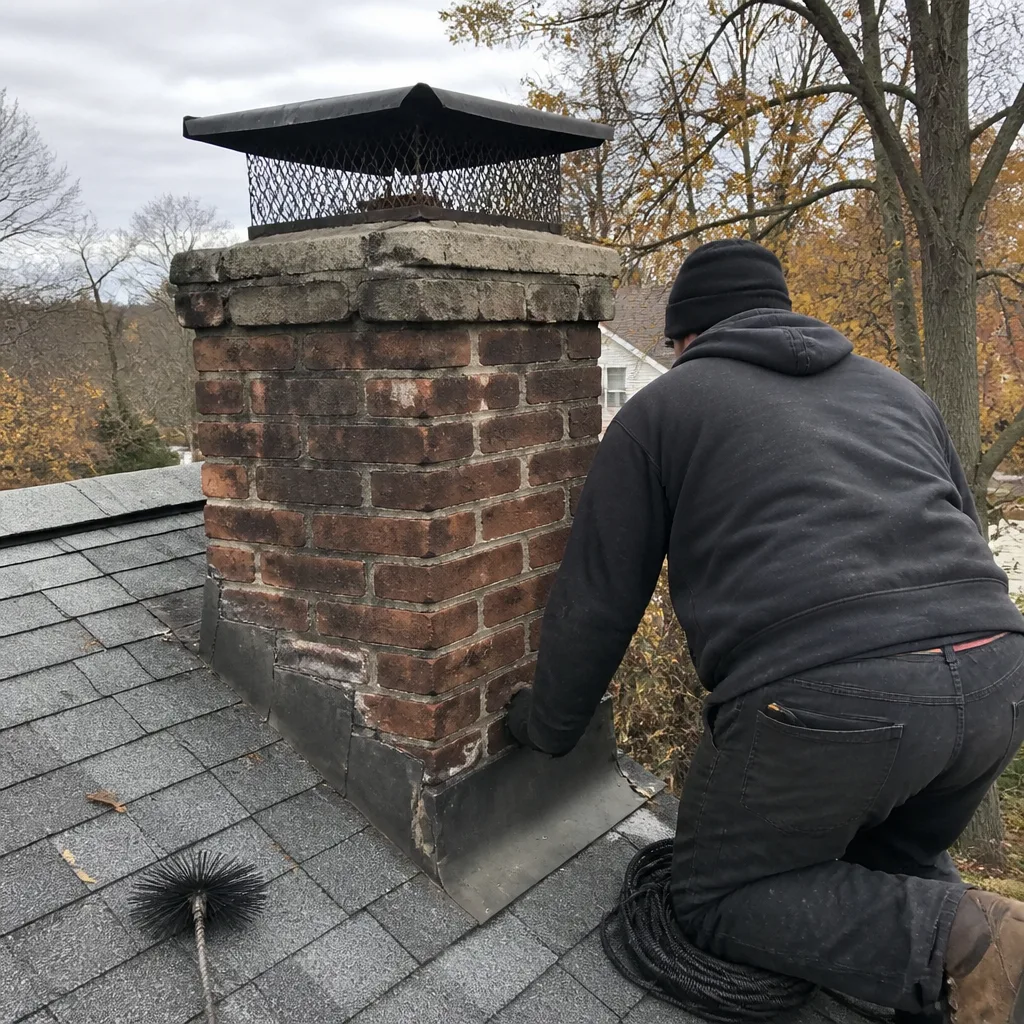 Before
 After
After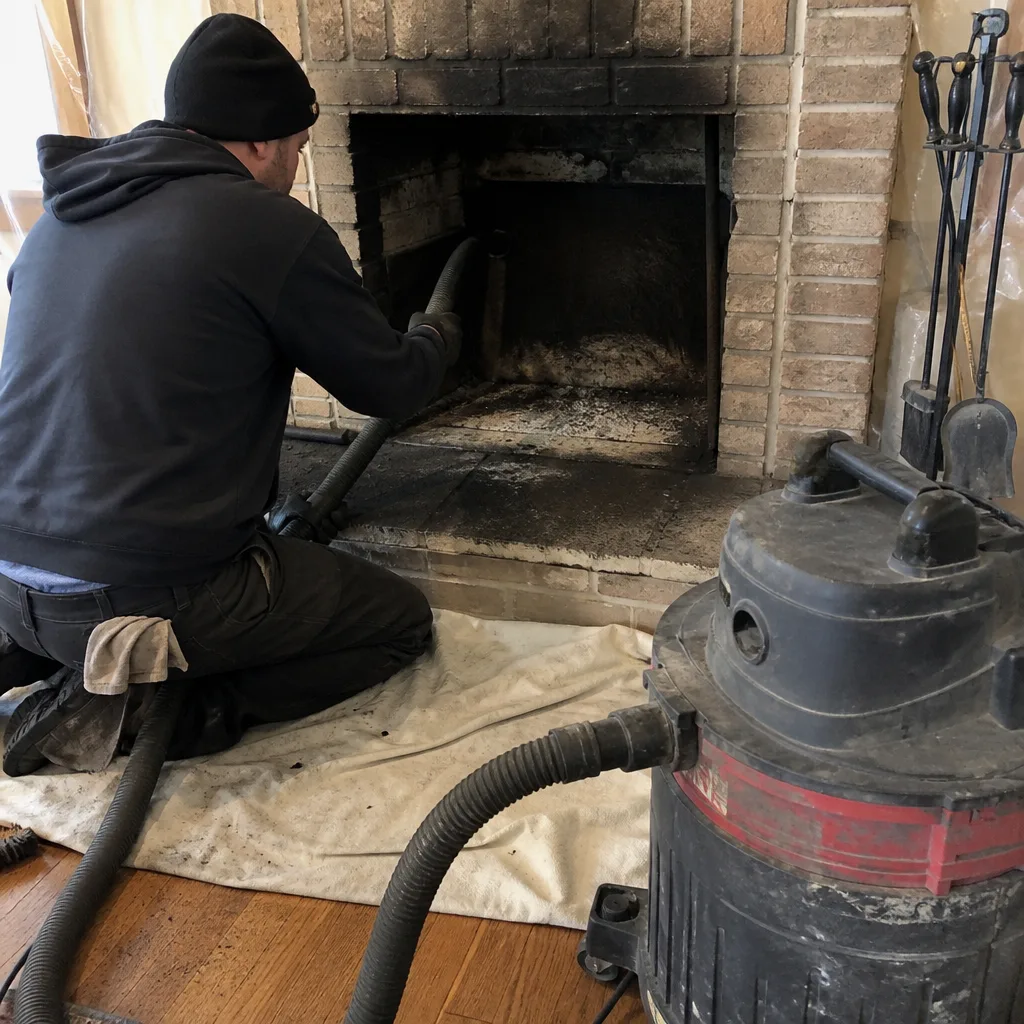 Before
 After
AfterSoot Removal in Collegeville, PA
Chimney Sweep services in Collegeville typically run $149 to $349 depending on how much soot has accumulated, how accessible the flue is, and whether a Level 2 camera inspection is needed alongside the cleaning. Most single-flue jobs are completed in one visit, same day you schedule.
If your fireplace smells like a campfire when it’s not in use, or you can see a dark, powdery crust inside the firebox, soot has built up to the point where it needs to come out. Soot is the lighter, earlier-stage byproduct of combustion – before it hardens into the tar-like Class II or Class III creosote that requires chemical treatment. Catching it at the soot stage is the easiest and least expensive point to address it.
At Emberly Chimney Cleaners Collegeville, we’ve been handling this exact problem since 2009, on more than 38,000 chimney inspections and cleanings across the region. Every visit starts with a written price before anyone touches your chimney, and ends with a documented photo record of what was found and what was done. That’s not a perk – it’s the baseline under the Haven Standard. Corrine Halstead leads our Collegeville crews, and if you want to talk through what’s going on with your fireplace before booking, call us at (610) 884-0366 – a real person picks up, day or night.
Soot removal is part of our broader Chimney Sweep in Collegeville service, and most homeowners who call about a smelly or sluggish fireplace end up needing exactly this.
When You Need Soot Removal
Soot accumulates gradually, so it’s easy to ignore until it starts affecting your home. Here are the clearest signs it’s time to call:
- A persistent smoky or acrid odor when the fireplace is cold. In Collegeville’s humid summers, soot absorbs moisture and off-gasses into your living space – that musty, ashy smell on a July afternoon is a reliable indicator that the flue walls are coated.
- Black, powdery residue inside the firebox or on the damper. If you can wipe a finger along the smoke shelf and come away with a dark smear, soot is present at a level that warrants cleaning. Light dusting is normal; a thick, soft layer is not.
- Smoke drafting back into the room during fires. A heavy soot coating narrows the effective diameter of the flue liner and disrupts draft – fires become smoky, eyes water, and the house starts smelling like the fire came inside.
- You haven’t had the chimney cleaned in more than a year. Montgomery County’s building code and NFPA 211 both recommend annual inspection and cleaning for actively used fireplaces. Many Collegeville homes, especially the colonial-style builds common in Evansburg Estates and along Skippack Pike, have fireplaces that get used October through March without a single cleaning in between.
- You’re buying or selling a home. A documented soot-free chimney with a photo record is a concrete deliverable for real estate disclosures – not just a verbal “we had it cleaned.” Our photo archive, required under Clause 4 of the Haven Standard, gives you exactly that.
- Your technician found early-stage creosote on the last visit. Class I creosote – the loose, flaky soot phase – is the easiest to remove. If a previous inspector flagged it, getting it out now prevents it from hardening into something that requires a wire brush and chemical treatment.
Our Soot Removal Process
We don’t show up with a flashlight and call it an inspection. Here’s exactly what happens on a Emberly soot removal visit in Collegeville:
- Written price before work starts. Haven Standard Clause 1 – H.A.V.E.N. “Have it in writing” – means you receive a written price, written scope, and written warranty before the tarp goes down. No surprises at the end.
- Pre-cleaning camera scan of the flue. We run a camera down the flue liner to document baseline conditions: soot depth, any cracking in the liner, condition of the smoke chamber, and whether what we’re seeing is Class I soot or has progressed toward Class II creosote. This is the NFPA 211 Level 2 inspection standard, and it’s the practice that’s been the default here since 2009 – years before most insurers started asking for it.
- Firebox and smoke chamber prep. We seal off the firebox opening with a dust barrier to protect your living space – a step that matters in the older homes with open floor plans common in the Perkiomen Woods area – then set up a HEPA-filtered vacuum system before any brushing begins.
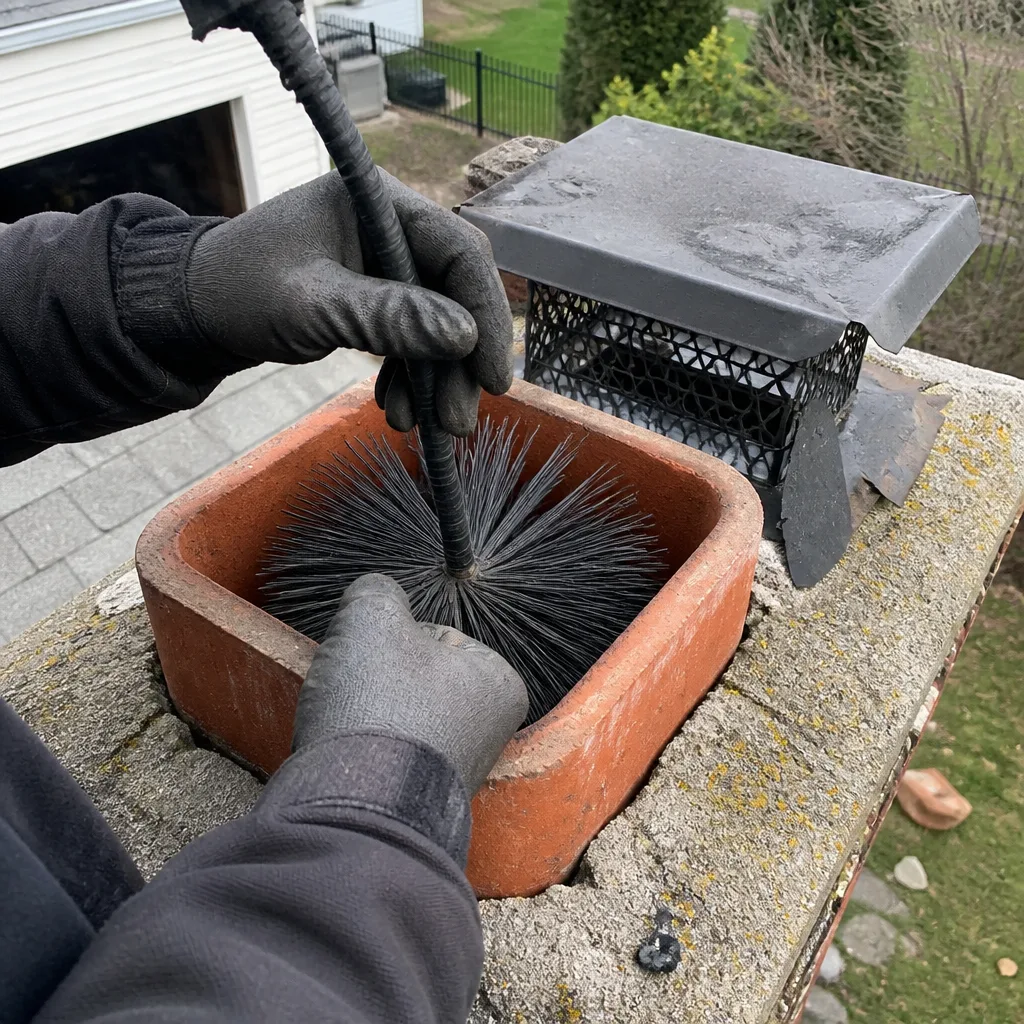
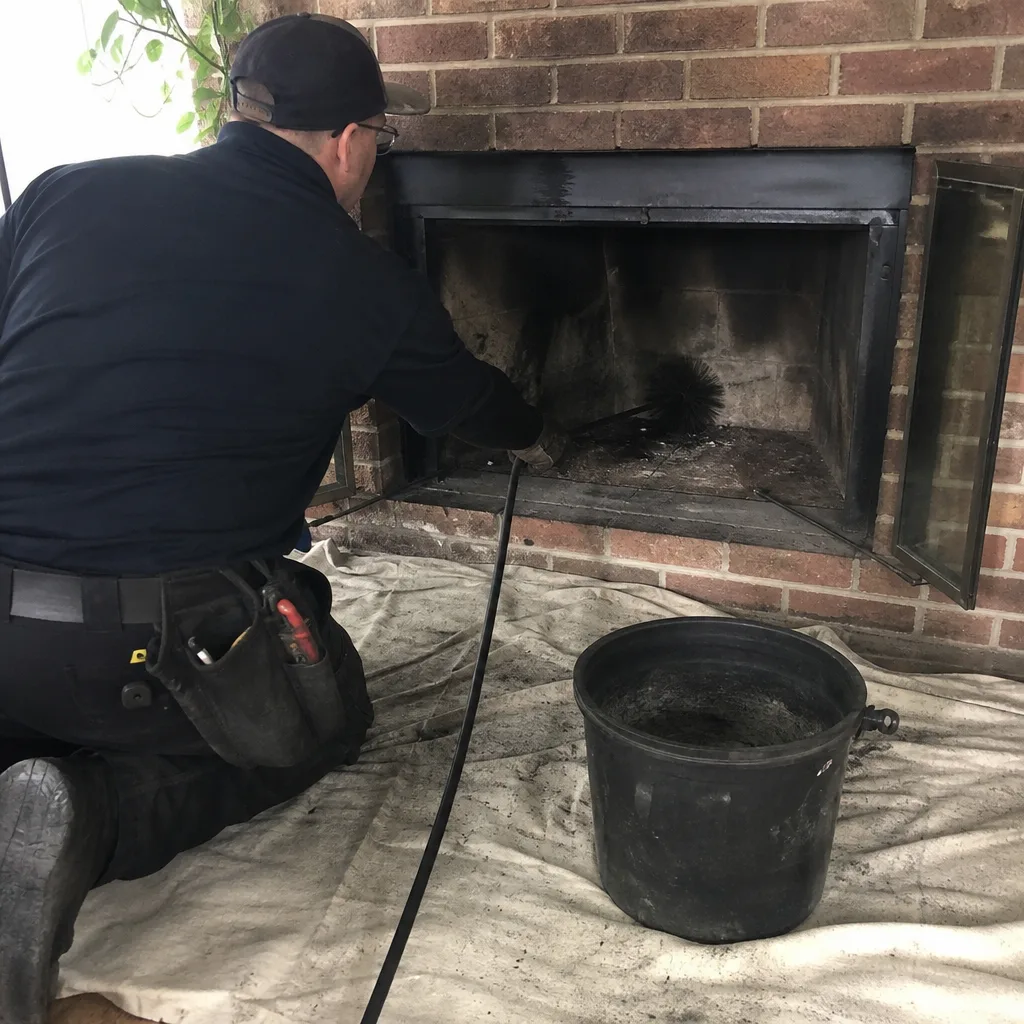
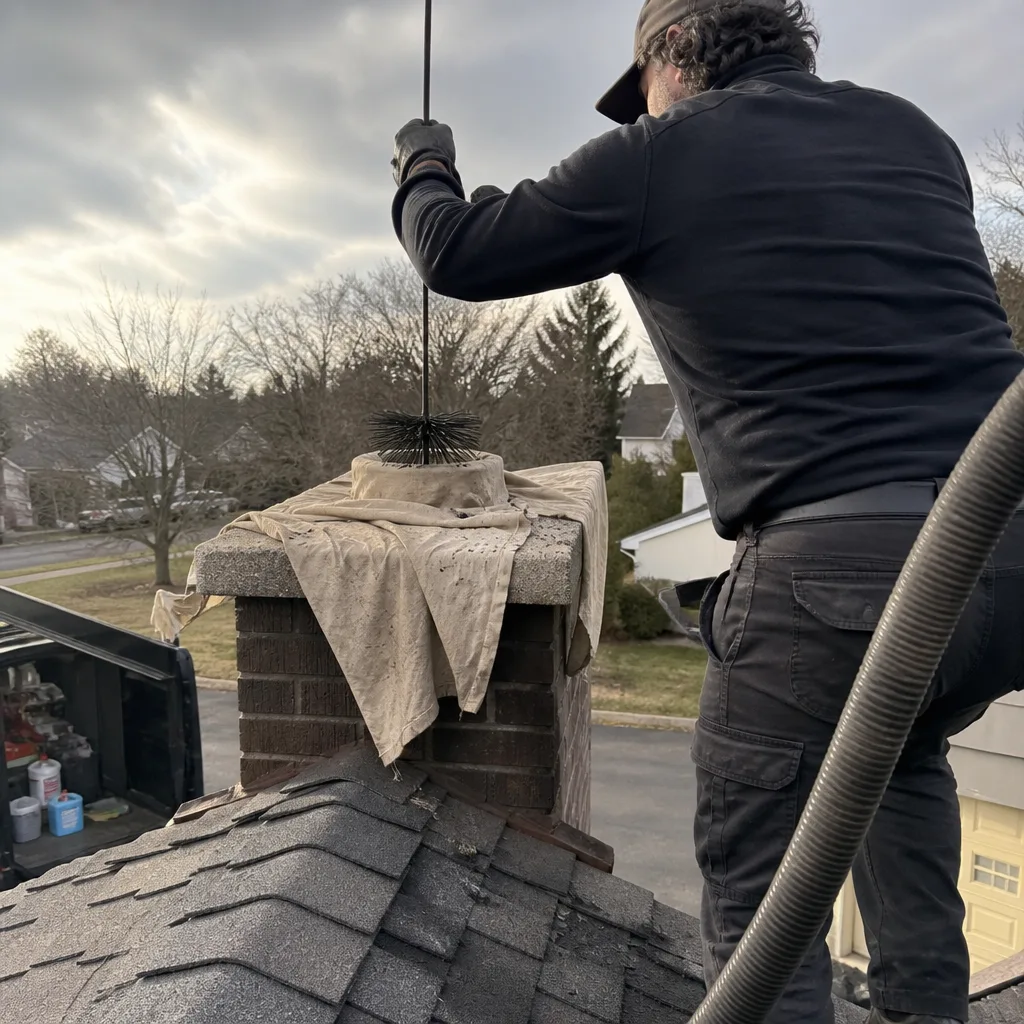
- Mechanical soot removal from crown to firebox. Using steel and poly brushes sized to your specific flue liner – whether that’s a clay tile liner, a DuraFlex stainless flex liner, or an older unlined masonry flue – we work top-down, pushing soot downward toward the vacuum. The smoke shelf and smoke chamber walls get particular attention; soot pockets there are the usual source of draft problems and odors.
- Post-cleaning camera verification. A second camera pass confirms the liner walls are clean and documents the finished state. You get photos – not just our word for it. This is the documented record that comes with every job under Clause 4 of the Haven Standard.
- Written summary and walkthrough. Before we pack up, we walk you through what we found, what we removed, and whether anything else warrants attention – in plain terms, not trade jargon. If the liner has a hairline crack or the crown is showing spalling (surface deterioration from freeze-thaw cycles, which Collegeville’s winters produce reliably), you’ll hear about it in writing, with photos, and with a separate quote if a repair is needed.
BeforeAfterSoot Removal Pricing in Collegeville
Soot removal in Collegeville runs $149 to $349 for a standard single-flue fireplace. Here’s how that range breaks down:
| Service | Typical Price Range |
|---|---|
| Standard soot removal, single flue (with camera inspection) | $149 – $249 |
| Heavy soot accumulation or second-stage creosote treatment | $249 – $349 |
| Wood stove or insert soot removal | $169 – $299 |
| Second flue (same visit) | Add $99 – $149 |
| Smoke chamber resurfacing (if recommended after cleaning) | Quoted separately in writing |
What moves your job toward the higher end of that range: a flue that hasn’t been cleaned in several years, a fireplace used heavily through a full Collegeville winter, older unlined masonry construction where soot packs into mortar joints, or a wood stove with a long horizontal connector pipe (common in finished basements in the Providence Commons area). A second flue – for homes with a fireplace and a gas appliance sharing the same chase – adds time and therefore cost, but both are always quoted in writing before work starts.
The camera scan is included. It’s not a line item we add at the end; it’s part of the job. And the 365-Day Done Right Promise is stamped on every job: if it’s not right, we make it right.
If you’ve received a written estimate from another company, bring it to us. We offer a free second opinion on any written estimate – no obligation, no pressure.
Call (610) 884-0366 to get your written quote. Estimates are free, and that number reaches a live person around the clock.
Why Soot Accumulates Faster in Collegeville Homes
Collegeville sits in Montgomery County’s Perkiomen Valley, where winters run cold and damp from November through early March. That combination matters for chimneys in a specific way: cold, moisture-laden air descending into a flue that hasn’t fully warmed up creates the condensation conditions where soot binds to liner walls faster than it would in a drier climate.
We also see a pattern in Collegeville’s stock of 1980s and 1990s colonials – the kind common in developments along Route 29 and near Perkiomen School – where the original fireplace was built as an aesthetic feature and sees only occasional use. Occasional use actually produces more soot per fire than regular use: a cold firebox and a cold flue create incomplete combustion, and incomplete combustion means more particulate matter sticking to the liner walls. A fireplace used once or twice a month through winter needs cleaning just as reliably as one used every weekend.
Homes with gas inserts and older clay tile liners are another pattern we see regularly in Collegeville. Gas combustion produces a different soot chemistry – lighter, more acidic – that can be invisible to the eye but detectible on camera. That’s one reason the camera scan isn’t optional here.
What Soot Removal Does and Doesn’t Cover
Soot removal addresses Class I creosote: the loose, dry, flaky or powdery deposit that brushes away mechanically. If a camera scan shows the accumulation has progressed to Class II creosote – a harder, tar-like deposit – or Class III creosote (a glazed, shiny surface deposit that resists mechanical removal), the scope and price will change, and you’ll hear about it before any additional work begins. Chemical treatment for Class II and Class III situations is quoted separately, in writing, with an explanation of why the standard brush approach isn’t sufficient.
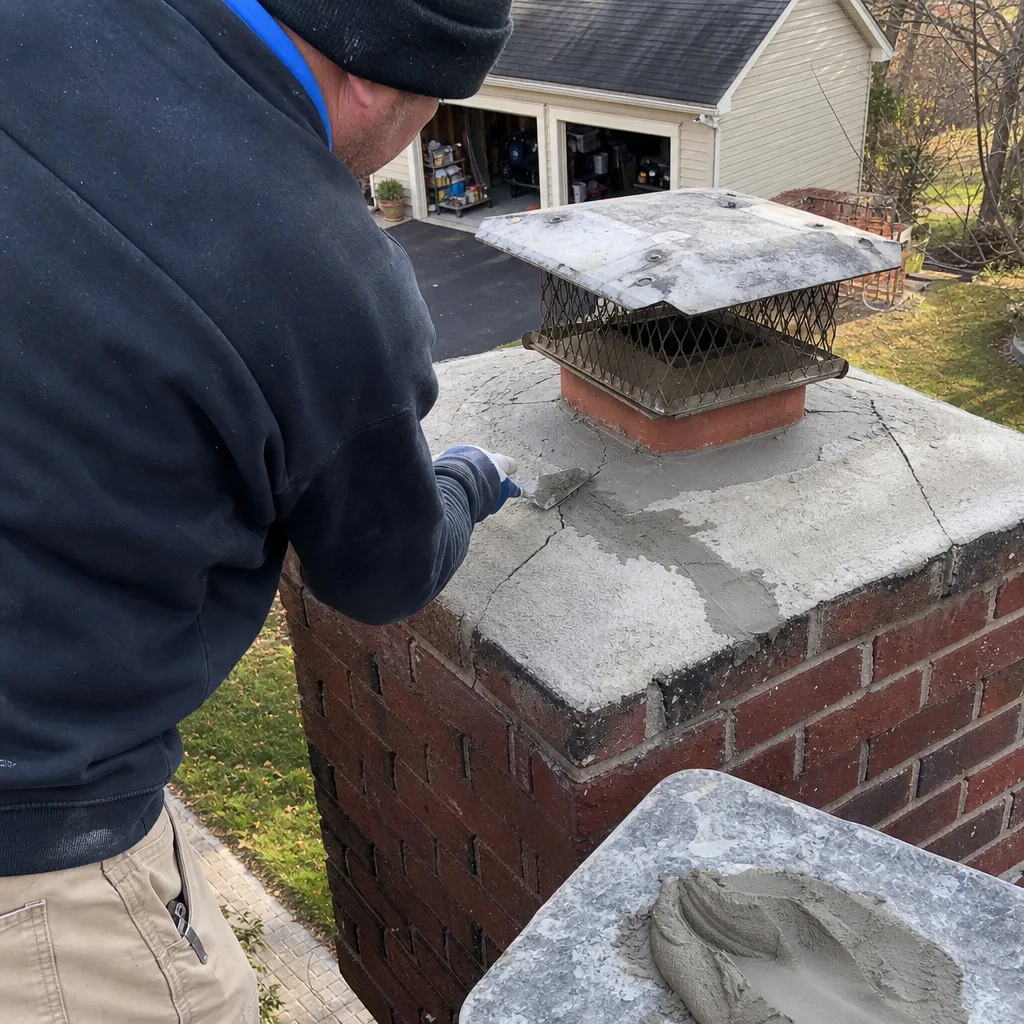
Soot removal also doesn’t repair a cracked flue liner, rebuild a deteriorated smoke chamber, or address a missing or damaged chimney cap. If any of those issues are visible on the camera scan, they’ll be documented in photos and described in plain terms – with a separate written quote if you want to address them. Nothing is bundled in without your knowledge.
FAQs – Soot Removal
How much does soot removal cost in Collegeville, PA?
Soot removal in Collegeville typically costs $149 to $349 for a single-flue fireplace, with the camera inspection included. The price depends on how much has accumulated, whether the job is straightforward Class I soot or has progressed toward Class II creosote, and whether it’s a standard masonry fireplace or a stove insert with a long connector pipe. You’ll have a written price in hand before any work starts – call (610) 884-0366 for a free estimate.
Is soot removal the same as a chimney sweep?
Soot removal is one component of a full chimney sweep. A sweep covers the flue liner, smoke chamber, smoke shelf, firebox, and damper area. Soot removal specifically targets the particulate deposits – the loose, powdery byproduct of combustion – before they harden into creosote. When soot is the primary issue, the job is often straightforward. But because we run a camera before and after every cleaning, we see exactly what else is present. If heavier deposits or structural issues show up, we’ll document them and quote them separately. See our full Chimney Sweep in Collegeville page for the complete picture of what a sweep covers.
Can I remove soot from my chimney myself?
You can wipe soot from inside the firebox with a damp cloth and a HEPA vacuum – that’s routine maintenance. But the flue liner and smoke chamber above the damper are a different matter. Brushing the flue without a proper vacuum system creates a soot cloud that migrates through every gap in the damper and firebox and settles on furniture, carpets, and HVAC returns. Beyond the mess, you won’t have a camera record of the liner condition, so you won’t know whether there’s a crack or obstruction that could allow combustion gases to migrate into the house. The mechanical work itself isn’t the dangerous part; it’s the lack of documentation that creates the real risk over time. A trained technician with HEPA equipment and a camera is the right tool for the flue and smoke chamber.
How often should soot be removed from a Collegeville chimney?
NFPA 211 recommends an Annual Sweep and inspection for any chimney in regular use – and in Collegeville’s climate, that’s the right baseline. Homes in Collegeville that use their fireplace four or more times a month from October through February should consider twice-yearly cleanings: once in fall before the burning season and once in spring when seasonal humidity begins driving soot odors into the house. Occasional-use fireplaces – even those used only a handful of times each winter – still need an annual camera inspection, because soot accumulates per fire, not per season, and an unlined or older clay-tile flue in a 1990s colonial can show meaningful buildup after just a few cords of wood.
Key Takeaways
- Soot removal in Collegeville runs $149 to $349 for a single flue, with the camera inspection included and a written price before work starts.
- A camera scan before and after the cleaning is standard – not an add-on. You leave with photos documenting the before and after state of your flue.
- NFPA 211 Level 2 is the inspection standard we work to on every visit – not a flashlight look and a verbal report.
- The 365-Day Done Right Promise applies to every job. If it’s not right, we make it right.
- Collegeville’s humidity and cold winters accelerate soot binding – annual cleaning is a realistic minimum for actively used fireplaces.
- If you have a written quote from a competitor, we’ll give you a free second opinion on it.
Schedule Soot Removal in Collegeville
If your fireplace smells off, drafts poorly, or you can see the buildup inside the firebox, the camera will show us exactly what’s there. Corrine Halstead and the Emberly Chimney Cleaners Collegeville team have been doing this work since 2009 – more than 38,000 jobs, every one with a written price before it started and a photo record when it was done. That’s the entire model: you know what you’re paying, you see what was found, and you have documentation when it’s finished.
Call (610) 884-0366 to schedule. A real person answers, any hour. Estimates are free, written, and in your hands before anyone starts work.
Written by Corrine Halstead, Owner at Emberly Chimney Cleaners Collegeville, serving Collegeville.