
Last updated September 22, 2026
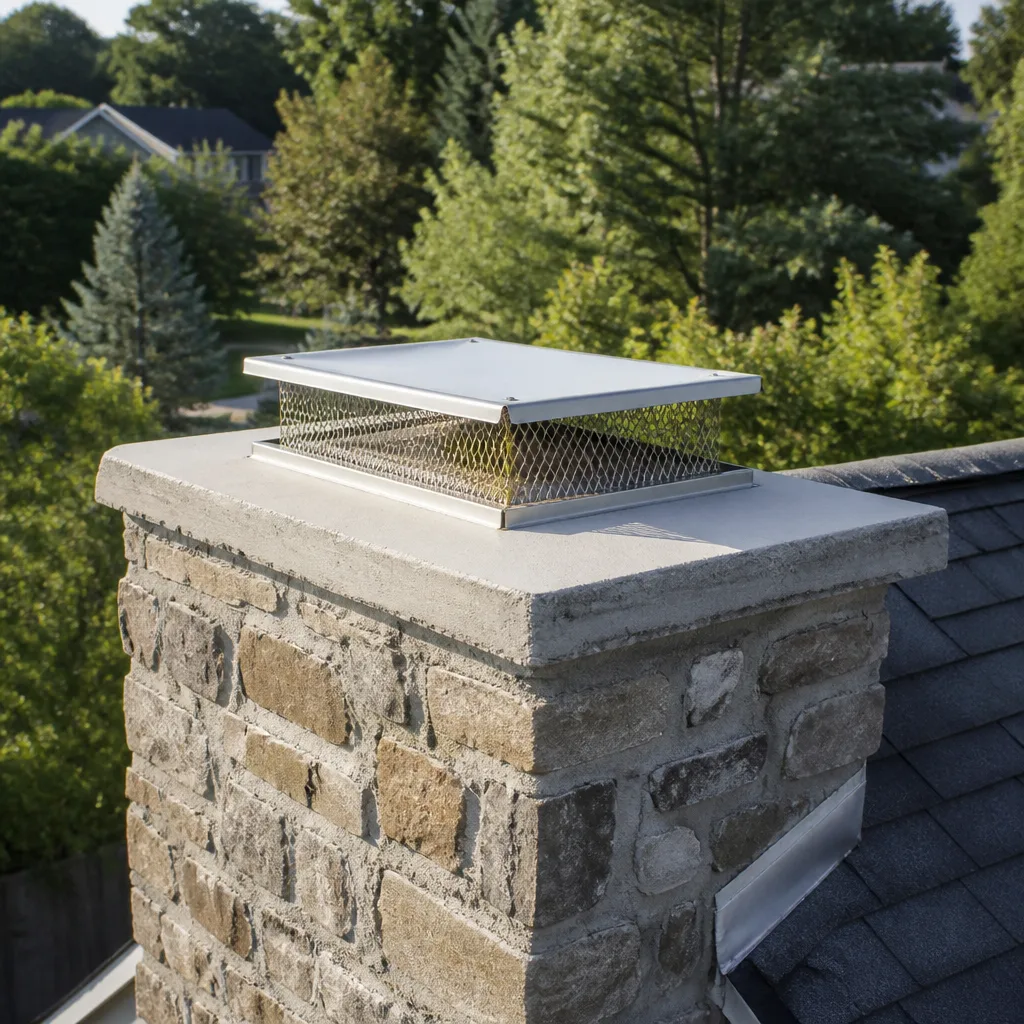
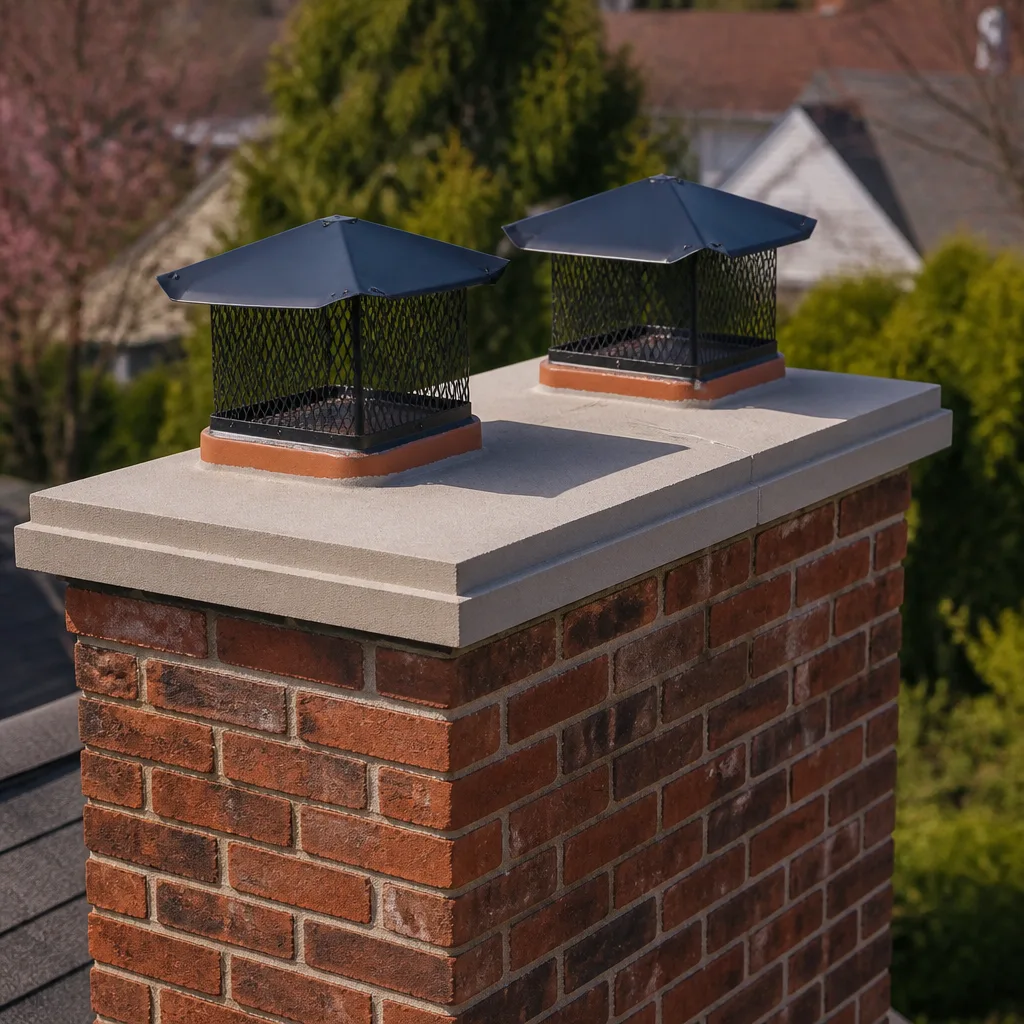
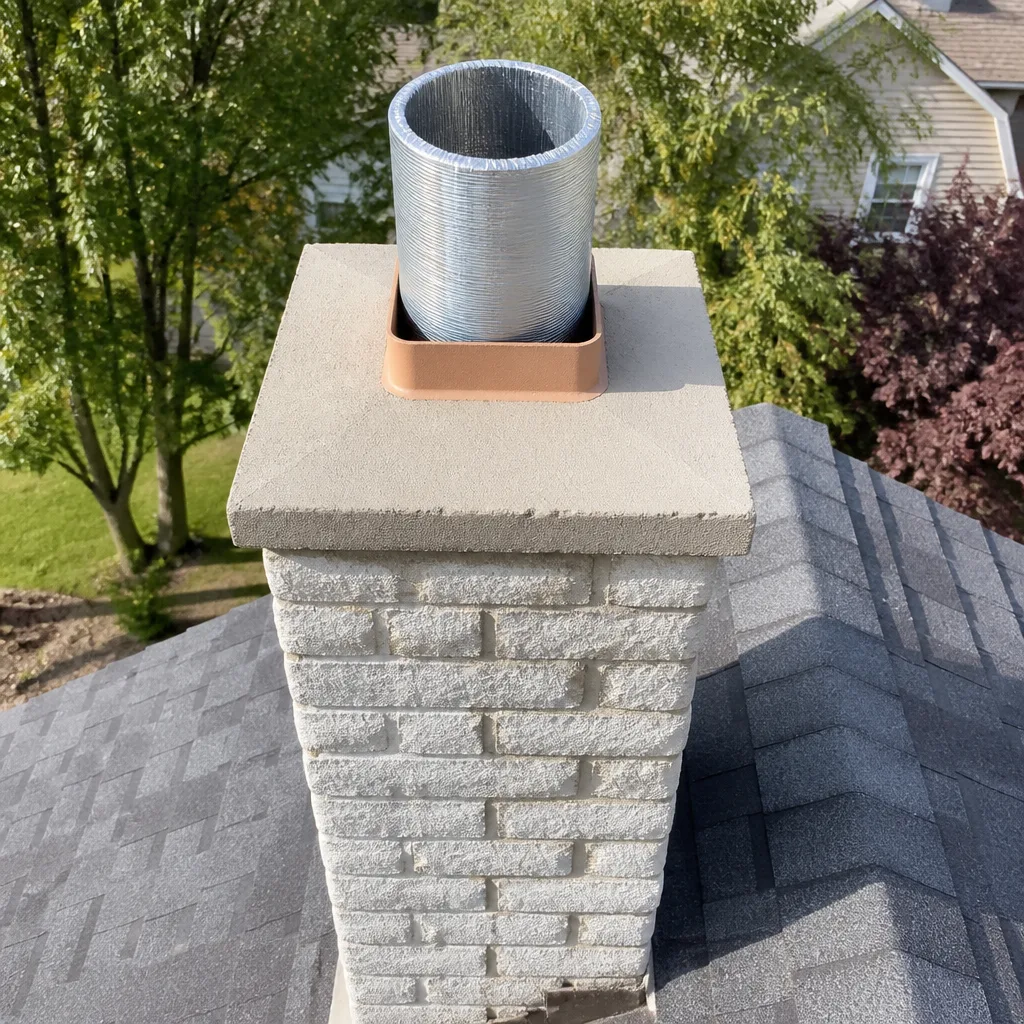
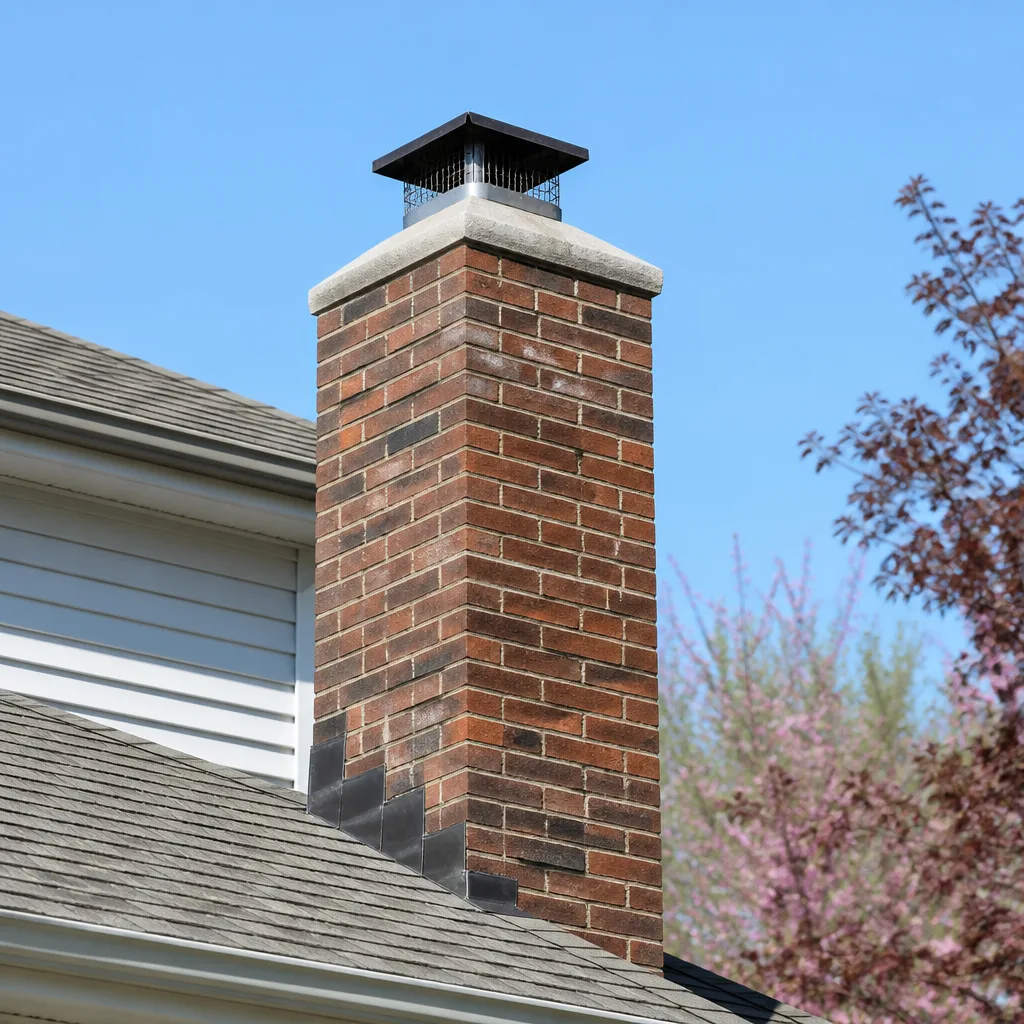
Level 1 sweep and inspection to the NFPA 211 annual standard - flue, crown, cap, and flashing checked and photographed
Chimney sweep logs do not sweep chimneys. They loosen some creosote - which then falls where a brush and vacuum still have to collect it.
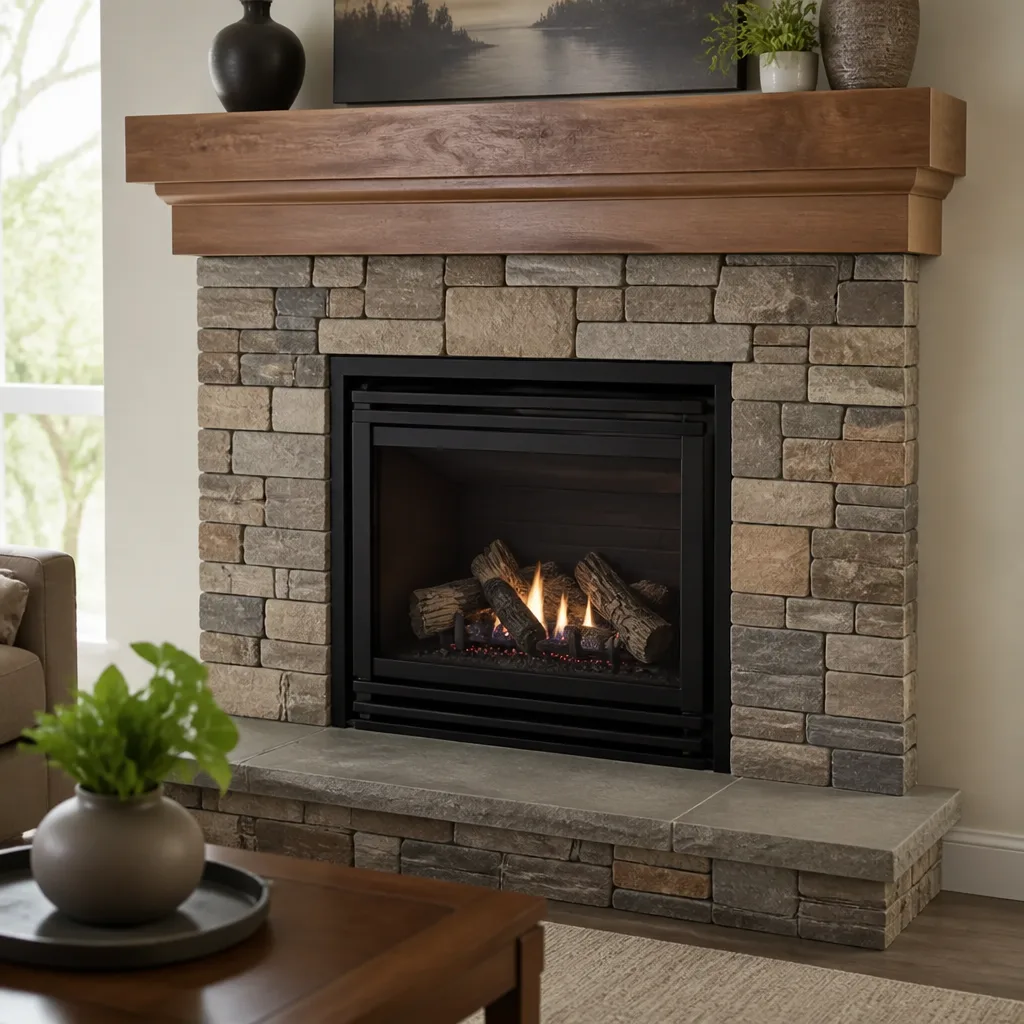
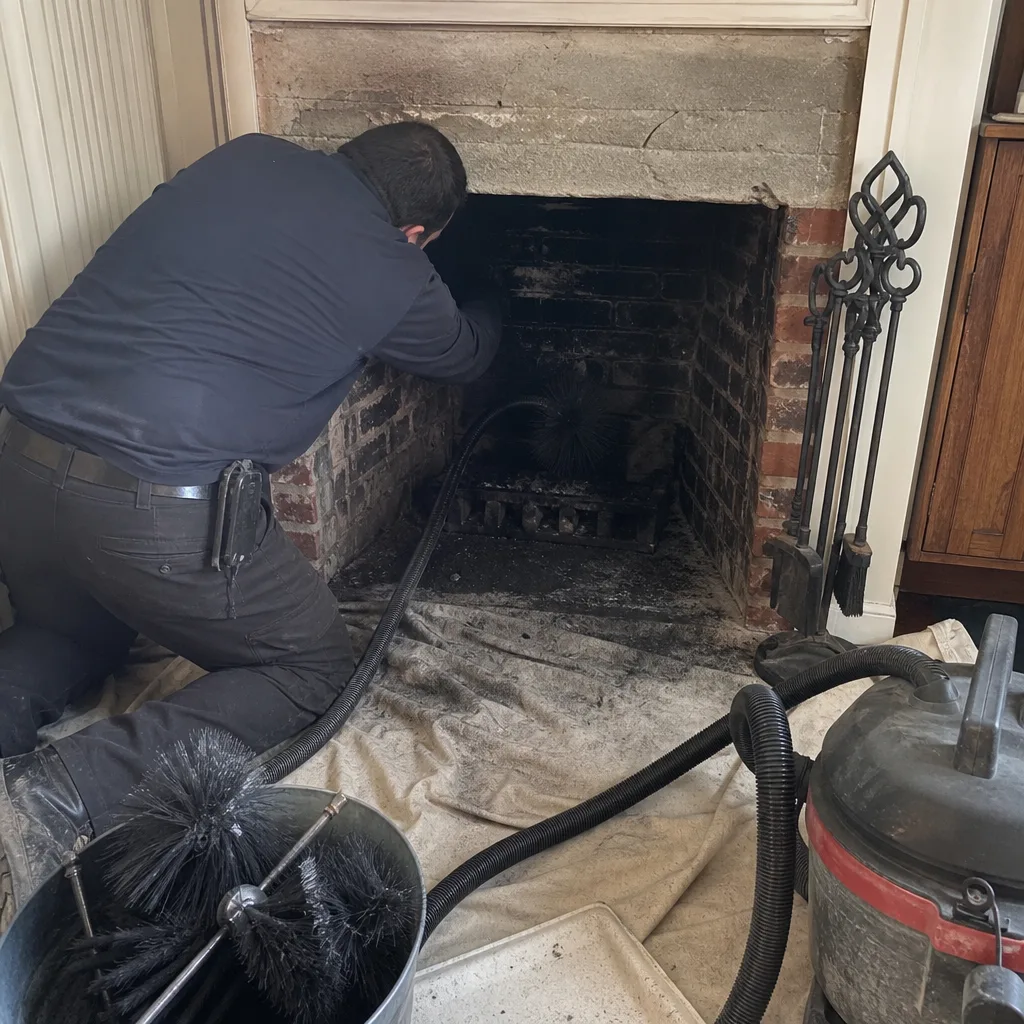 Before
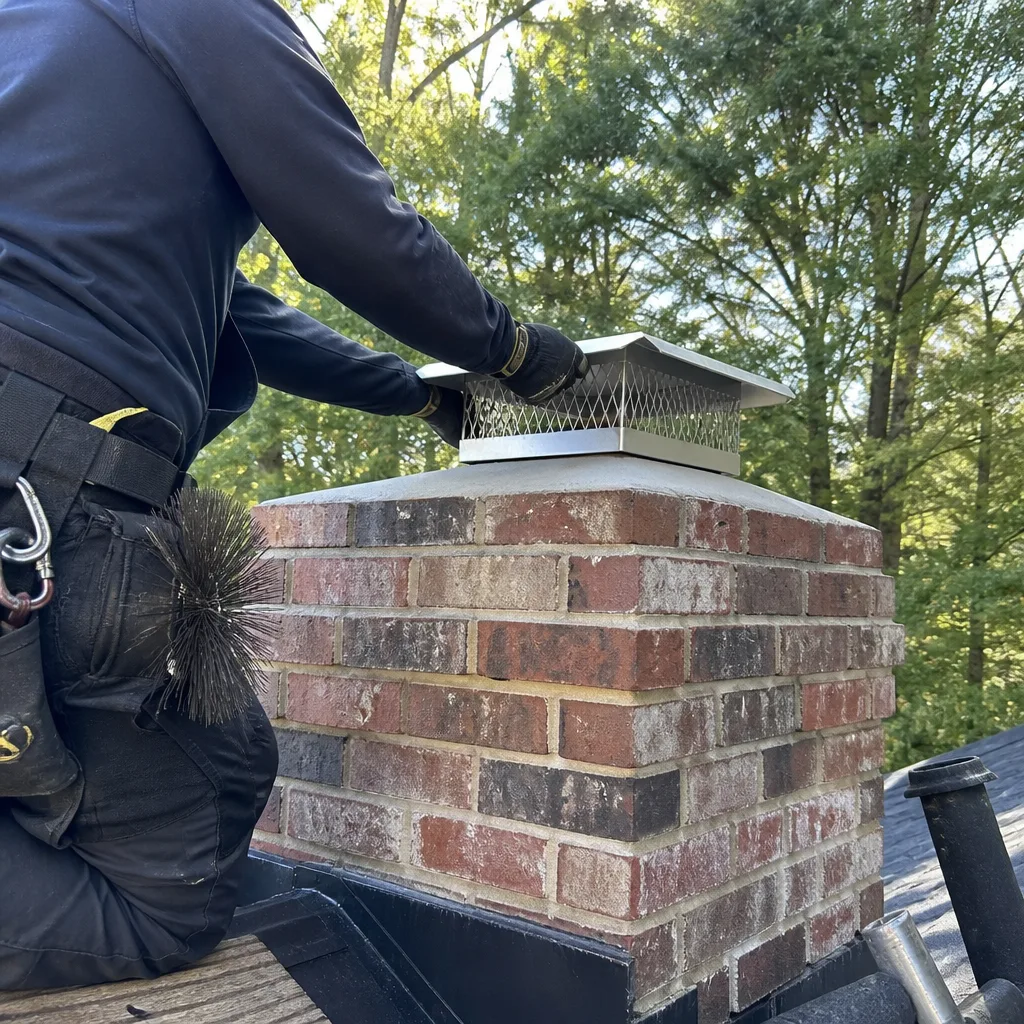 After
After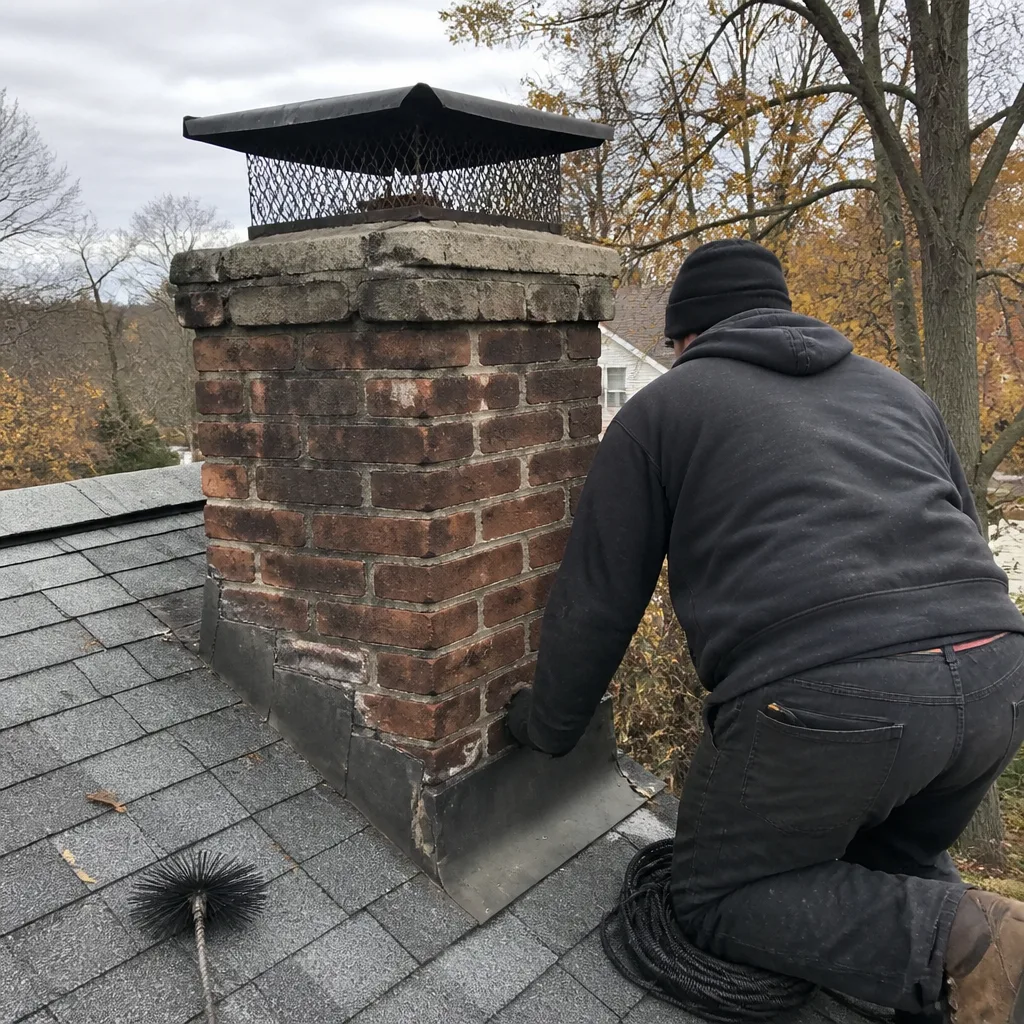 Before
 After
After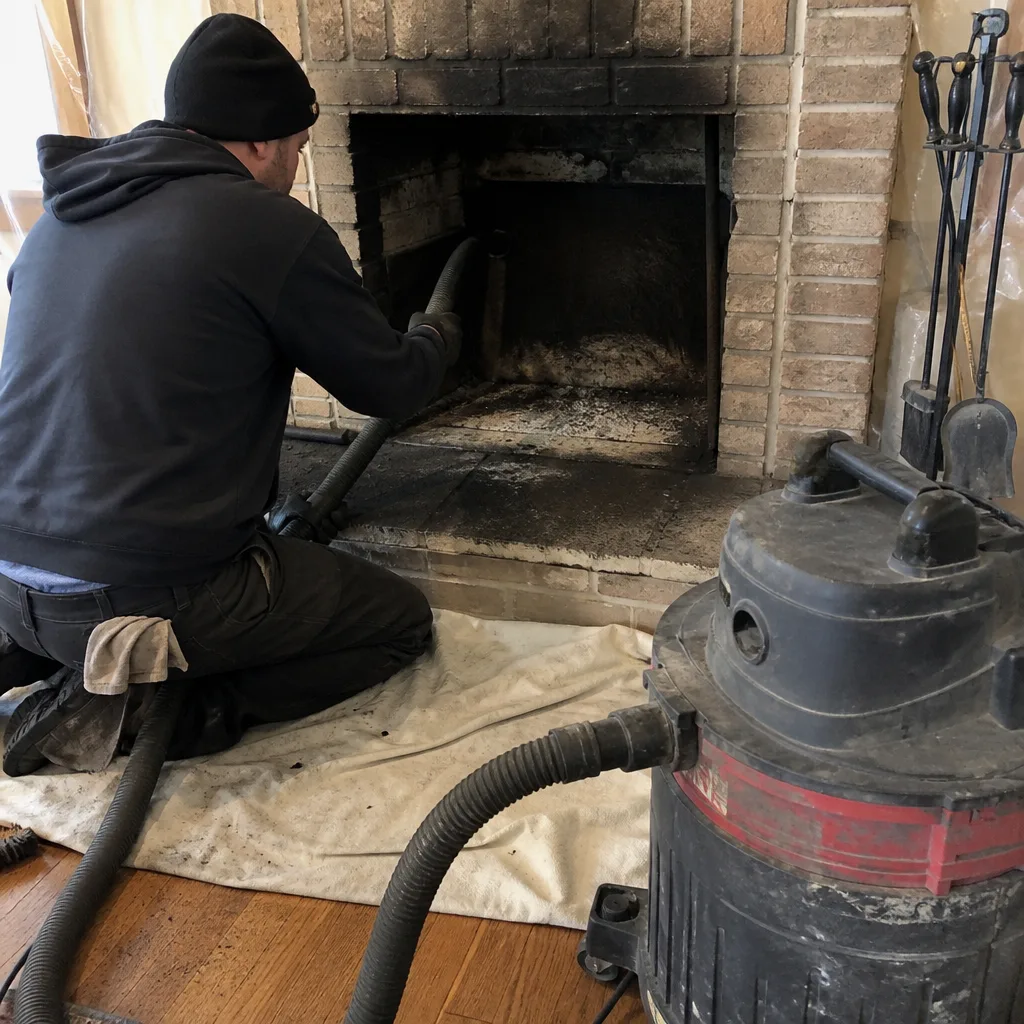 Before
 After
AfterThe Complete Guide to Chimney Cleaning in Collegeville
Most chimney companies in Collegeville hand you a receipt before they’ve looked inside the flue. In our experience across more than 38,000 chimney visits since 2009, that’s backwards. The brush work is the easy part; knowing what the brush might damage, or what it’s hiding, takes a camera and a written record first. This guide walks through how a proper chimney cleaning actually runs - from the scan that happens before any soot moves, to the documentation that proves the job was done right - and points to more guides & resources for Collegeville homeowners.
Quick Answer
A professional chimney cleaning in Collegeville typically costs $180-$320 for a standard sweep with Level 2 camera inspection included. The process should always begin with an internal flue scan, followed by a written scope and price before any work starts, then the cleaning itself, and finally a documented photo record of completed work. Skipping the camera-first step risks missing cracked liners, hidden creosote buildup, or structural damage that changes both the safety profile and the final cost.
Table of Contents
- What NFPA 211 Level 2 Really Means (And What Most Sweeps Actually Do)
- The Camera-First Workflow: Why Documentation Before Cleaning Changes Everything
- Collegeville-Specific Factors: Old Housing Stock, Wood Burners, and Liner Age
- Step-by-Step: How a Proper Chimney Cleaning Runs from Arrival to Departure
- How to Read a Post-Cleaning Report So You Know the Job Is Finished
- What a Written Cleaning Record Protects You From
- Chimney Cleaning Costs in Collegeville: What’s Included, What’s Extra
- Common Mistakes to Avoid
- When to Call a Professional
- Frequently Asked Questions
- The Bottom Line
BeforeAfterWhat NFPA 211 Level 2 Really Means (And What Most Sweeps Actually Do)
NFPA 211 is the National Fire Protection Association’s standard for chimneys, fireplaces, vents, and solid fuel-burning appliances. Within that standard, a Level 1 inspection is a visual check of readily accessible portions - what you can see from the hearth or roof without tools. A Level 2 inspection requires an internal examination of the flue liner, the smoke chamber, and all accessible portions of the chimney structure, typically using video scanning or photographic equipment.
Here’s where Collegeville homeowners get shortchanged. Many sweep companies advertise a “chimney inspection” that is technically a Level 1: a flashlight glance down the flue from the top or bottom, maybe a mirror on a stick. They’ll call it standard. They’ll charge $50-$80 for it, or bundle it “free” with a sweep. What they won’t do is run a camera the full length of the flue, record what they find, and hand you timestamped images you can reference later.
Emberly Chimney Cleaners made camera-scan documentation the default in 2009 - years before regulators or insurers asked for it. That practice became Clause 4 of the Haven Standard. Every technician carries a Chim-Scan or equivalent video system. The camera travels from the firebox to the crown, capturing liner condition, joint alignment, creosote classification, and any structural anomalies. You see what we see, in real time or on the report.
The difference matters for your wallet and your safety. A flashlight inspection might spot heavy soot at the bottom of the flue. It will not reliably detect a cracked terracotta liner at the third joint, a deteriorated smoke chamber, or Class III glazed creosote (the hard, tar-like deposit that ignites at lower temperatures and burns hotter than ordinary chimney fires). Those conditions change the scope of work, the price, and sometimes whether the chimney should be used at all until repairs are made.
In Collegeville’s older neighborhoods - think the homes near Main Street and Fifth Avenue, or the stone colonials off Route 29 - we’ve found liners installed in the 1960s and 1970s that look sound from the firebox but show spalling (flaking or chipping of the clay surface) and hairline fractures three courses up. A flashlight doesn’t catch this. A camera does. And catching it before the brushes go in prevents us from accidentally driving creosote into a cracked joint, or worse, dislodging a weakened liner section.
Key distinction: A true Level 2 inspection is not an upsell. It’s the minimum responsible assessment before any cleaning or repair work is scoped. If a company in Collegeville tells you they “include a free inspection” but can’t show you the camera footage, you’re getting a Level 1 dressed up in marketing language.
The Camera-First Workflow: Why Documentation Before Cleaning Changes Everything
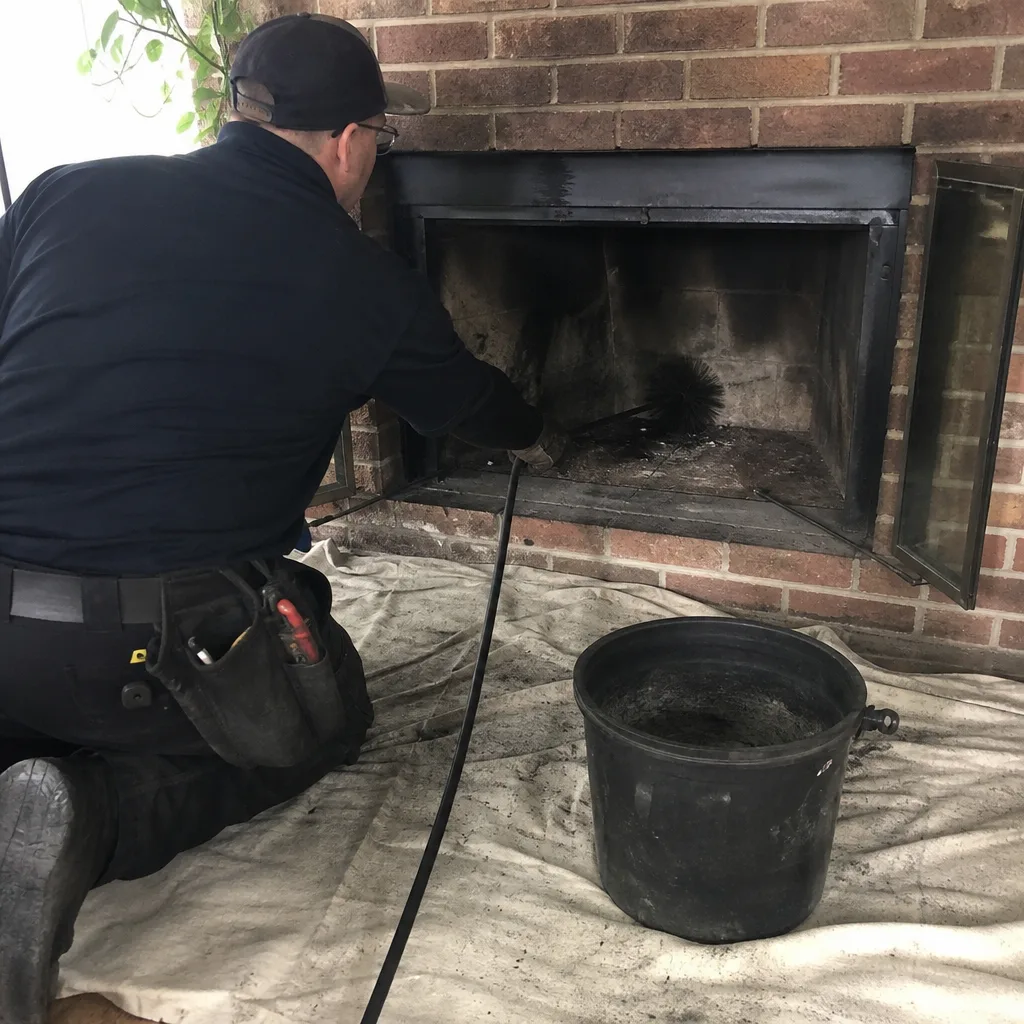
The standard sequence at most chimney companies is: show up, lay down a drop cloth, run brushes, vacuum soot, collect payment, leave. The inspection, if it happens, is a verbal “looks good” or “you need a liner” delivered while the tech is already packing up. This sequence is efficient for the company. It’s risky for the homeowner.
Our sequence is different. It’s built around the principle that you cannot price what you haven’t seen, and you shouldn’t clean what you haven’t documented. Here’s how it runs on every Chimney Sweep in Collegeville visit:
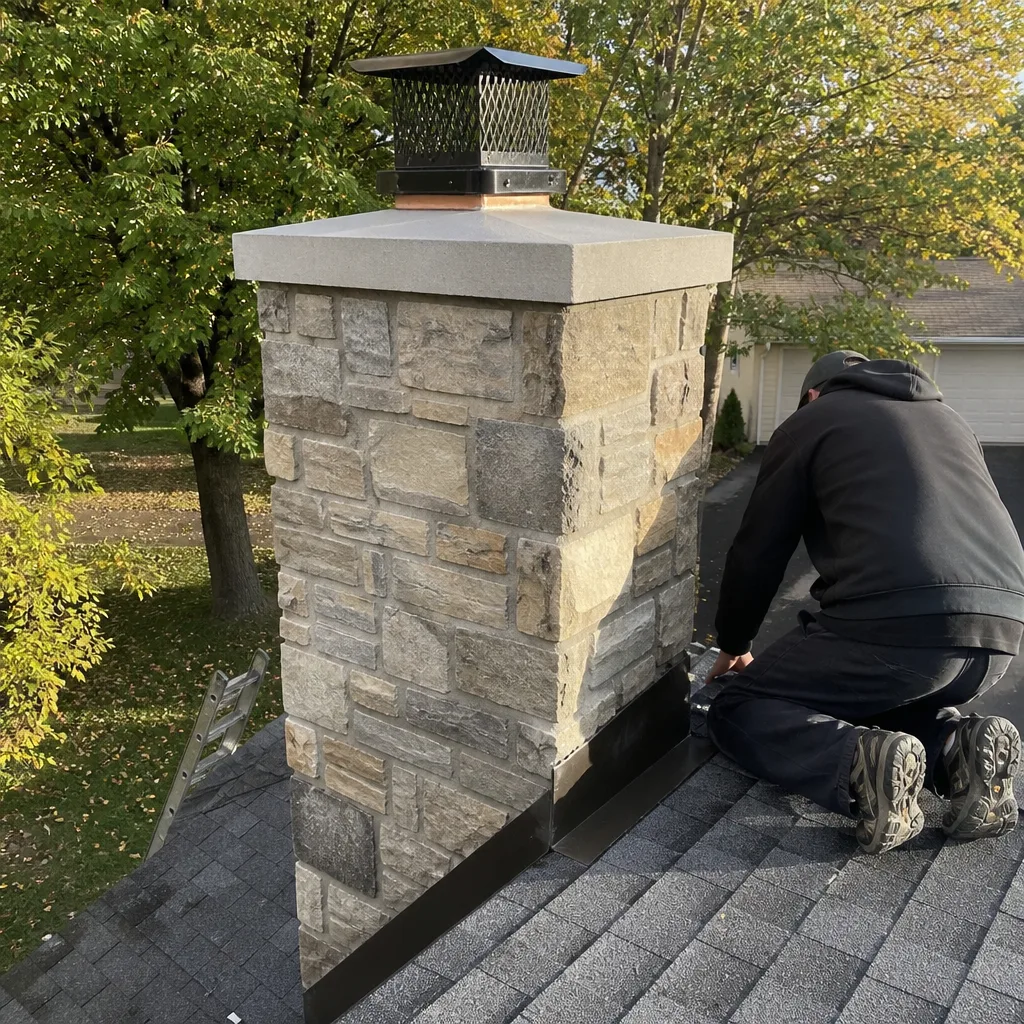
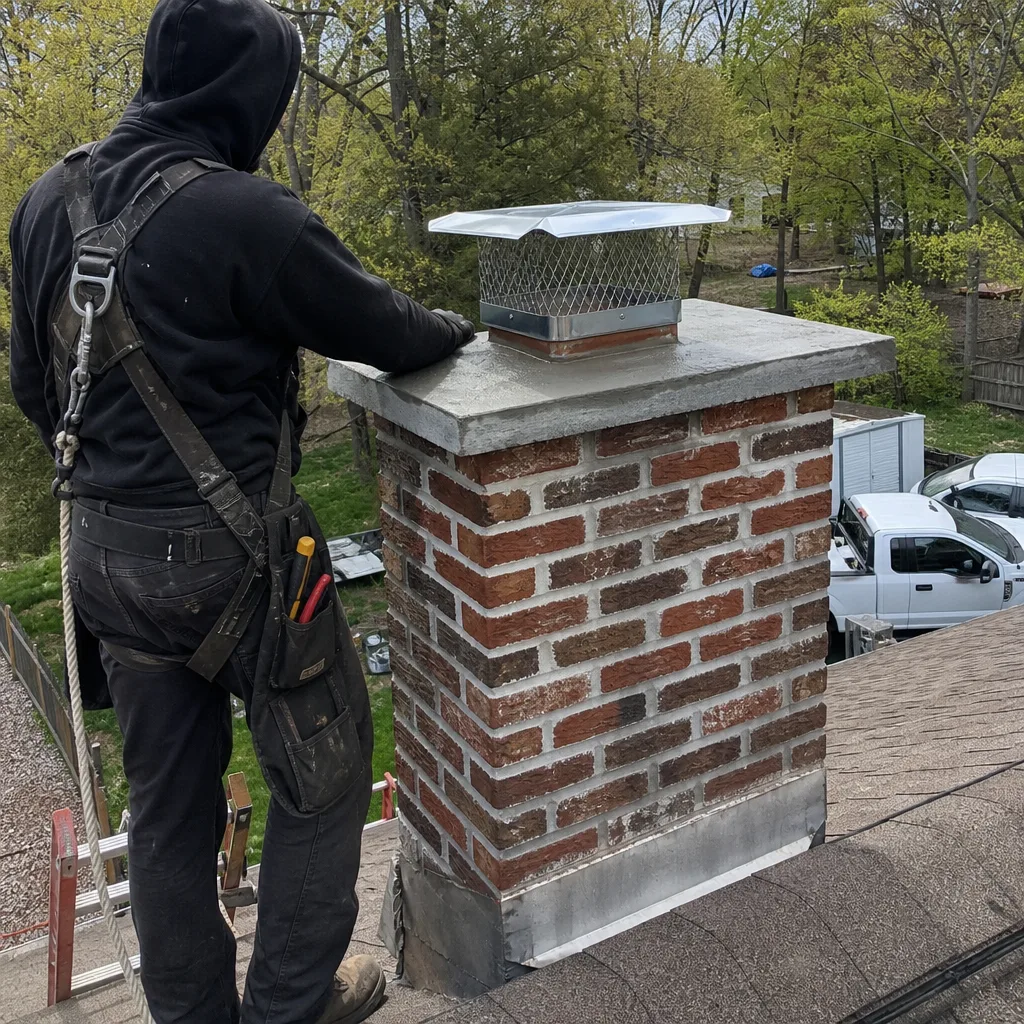
- Arrival and exterior assessment. We photograph the crown, cap, and visible masonry from the roof or ladder before entering the home. This establishes baseline condition and identifies obvious external damage - missing mortar, crown cracks, or cap rust - that might affect interior findings.
- Interior camera scan. The video scope enters from the firebox and travels the full flue length. We record liner material (clay tile, metal, or cast-in-place), joint condition, creosote class and thickness, any obstructions (bird nests, collapsed tile, debris), and structural anomalies. You watch live if you’re present; the recording is archived either way.
- Written findings and priced scope. Before any cleaning begins, you receive a written report with the camera stills, our assessment, and a flat-price quote for the recommended work. This is Haven Standard Clause 1: “Have it in writing.” No verbal estimates. No “we’ll see how it goes” pricing. If the camera shows a routine Class I or II creosote buildup and sound liner, the price is the standard sweep rate. If we find Class III glaze, liner damage, or smoke chamber deterioration, the scope and price adjust accordingly - but you see the evidence before deciding.
- Cleaning execution. Only after you’ve approved the written scope do we deploy brushes, rods, and vacuum systems matched to your flue size and liner type. For metal liners from DuraFlex or Olympia Chimney, we use poly brushes that won’t score the stainless surface. For clay tile, we select bristle stiffness based on creosote class and tile condition documented in the scan.
- Post-cleaning verification scan. The camera goes back in. We confirm the flue is clear to bare liner, document the final condition, and capture any newly exposed features (a crack masked by creosote, for instance). This second scan is your proof the job was completed to standard.
- Delivered documentation. You receive the full photo record, the written scope with final price, and a warranty document stamped with the 365-Day Done Right Promise. Clause 4 of the Haven Standard requires this archive; we maintain it for the life of your chimney’s service history with us.
This sequence adds perhaps 20 minutes to the visit. It eliminates the “surprise” $1,200 liner recommendation delivered after the tech is halfway out the door. It gives you leverage with insurers, home buyers, and competing quotes. And it catches the conditions that make cleaning unsafe to perform without repair first.
We’ve had Collegeville homeowners bring us camera records from previous sweeps that showed clear liner cracks - documented, visible, timestamped - where the original company never mentioned them because they didn’t run a camera at all. That’s not oversight. That’s a different standard of practice.
Collegeville-Specific Factors: Old Housing Stock, Wood Burners, and Liner Age
Collegeville sits in Montgomery County with a housing stock that skews older than the regional median. The borough itself was incorporated in 1896, and many homes in the central grid and surrounding townships - Trappe, Skippack, Perkiomen - date to the mid-20th century or earlier. For chimneys, age isn’t just a number. It’s a predictor of liner material, combustion appliance type, and the specific failure modes we encounter.
Terracotta liners in pre-1980 construction. Most Collegeville homes built before 1980 have clay tile flue liners, typically 8×8 or 8×12 interior dimensions, mortared at the joints. These liners were never designed for the thermal cycling of modern airtight wood stoves or high-efficiency inserts. After 40-60 years of heating seasons, the mortar joints deteriorate, tiles shift, and the liner loses its ability to contain sparks and gases. We see this routinely in the split-levels and Cape Cods near Ursinus College and along Ridge Pike. A camera scan reveals joint gaps of 1/4 inch or more - enough to let creosote seep into the chimney cavity and enough to compromise fire containment.
Wood-burning prevalence and creosote class. Montgomery County has a higher rate of supplemental wood heat than Philadelphia or Delaware Counties. Collegeville’s wooded lots and established neighborhoods make wood stoves and fireplace inserts common. The problem: modern EPA-certified stoves burn efficiently at low temperatures, which produces more unburned hydrocarbons that condense as creosote. The result is often Class II or III buildup even in chimneys swept annually. Class III glazed creosote - shiny, hard, nearly impossible to remove with standard wire brushes - requires chemical treatment or rotary cleaning. You won’t know you have it without a camera. We’ve found 3/8-inch glaze layers in Collegeville chimneys that passed flashlight inspection as “a little soot.”
Freeze-thaw masonry damage. Collegeville’s climate delivers 20-30 freeze-thaw cycles annually, with January lows averaging 22°F and moisture from snow, sleet, and driving rain. Water enters crown cracks and mortar joints, expands on freezing, and spalls brick faces or disintegrates crown concrete. Exterior damage creates interior problems: water-stained liners accelerate deterioration, and leaking flue gases cool faster, increasing condensation and creosote formation. The camera scan catches water streaking and liner staining that indicates active leaks even when the homeowner hasn’t noticed dampness.
Liner age and cleaning scope. A 50-year-old terracotta liner in sound condition can be safely cleaned with standard methods. The same liner with hairline cracks or shifted tiles requires gentler technique, shorter brush sections to avoid leverage stress, and often a recommendation for relining before the next burning season. In Collegeville’s market, we’ve found that liners over 40 years old have a 35-40% likelihood of showing camera-visible damage that affects cleaning approach. That’s not a reason to panic. It is a reason to document before brushing.
Local permit context. Montgomery County does not require a permit for routine chimney cleaning. However, liner replacement, crown rebuilds, and structural repairs do require permits through the township municipality. A documented cleaning record with camera evidence of liner condition simplifies permit applications and inspector verification. We’ve written letters to Collegeville-area building departments referencing specific camera timestamps to support permit requests - another reason the photo archive matters beyond the immediate service.
Step-by-Step: How a Proper Chimney Cleaning Runs from Arrival to Departure
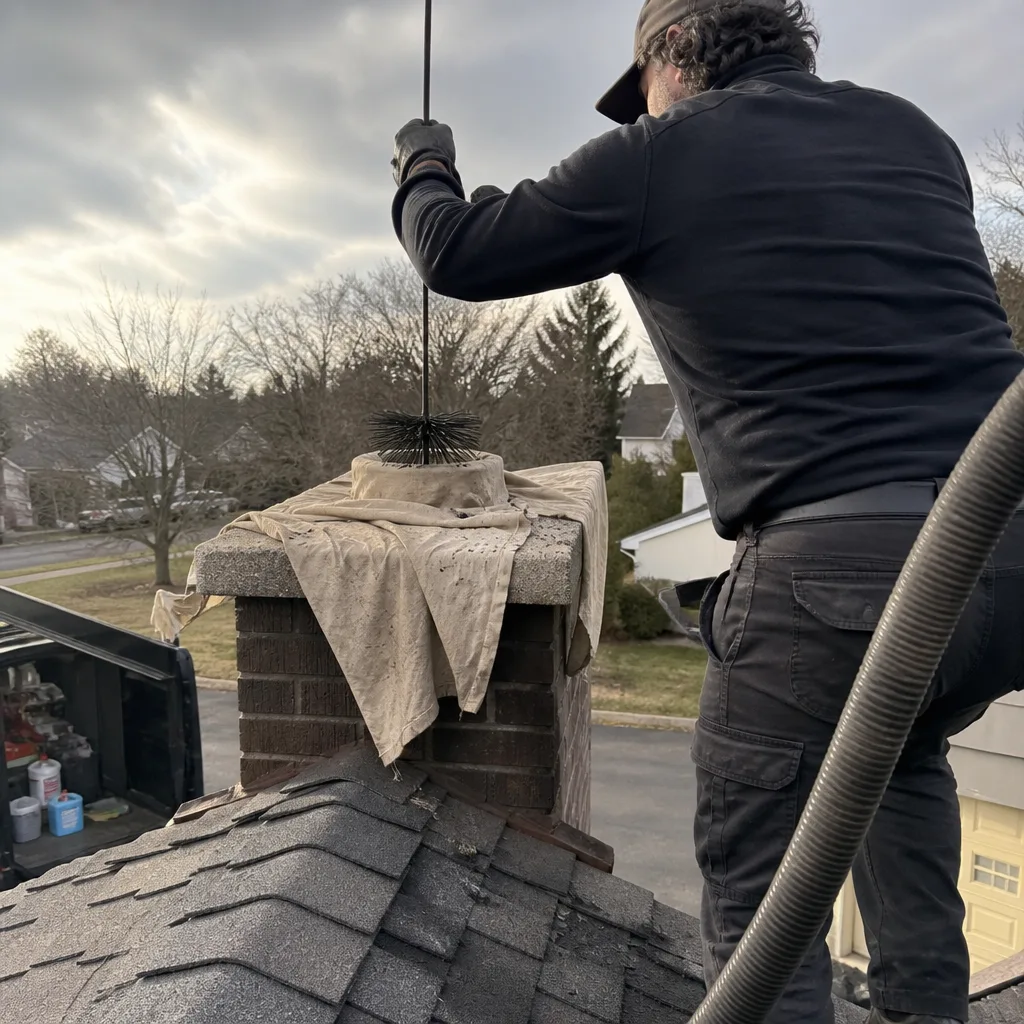
For homeowners who want to know exactly what happens during the service window, here’s the complete sequence for a standard Chimney Sweep in Collegeville visit. Times are approximate for a single-flue masonry fireplace; multi-flue systems or inserts add complexity.
- 0:00-0:10 - Arrival and setup. Technician confirms appointment details, lays protective coverings from entry to work area, and sets up HEPA vacuum and video equipment. You’ll receive a text when we’re en route; the technician’s name and license information are provided before arrival.
- 0:10-0:30 - Exterior documentation. Roof or ladder access to photograph crown, cap, flashing, and visible masonry. We note water damage, vegetation growth, animal intrusion evidence, and structural concerns. In Collegeville’s mature neighborhoods with heavy oak canopy, we often find cap screens clogged with leaf debris or deteriorated from acidic oak tannin runoff.
- 0:30-0:55 - Interior camera scan (pre-cleaning). The video scope enters at the firebox, traverses the smoke chamber, and runs the full flue length. We record liner type and condition, creosote class and distribution, joint integrity, and any obstructions. You observe in real time if present. This scan determines cleaning method and whether additional work is needed.
- 0:55-1:10 - Written findings and priced scope delivery. The technician presents the camera stills, explains findings in plain terms, and provides a written quote with flat price, scope description, and warranty terms. No work proceeds without your signature. This is Haven Standard Clause 1 in practice.
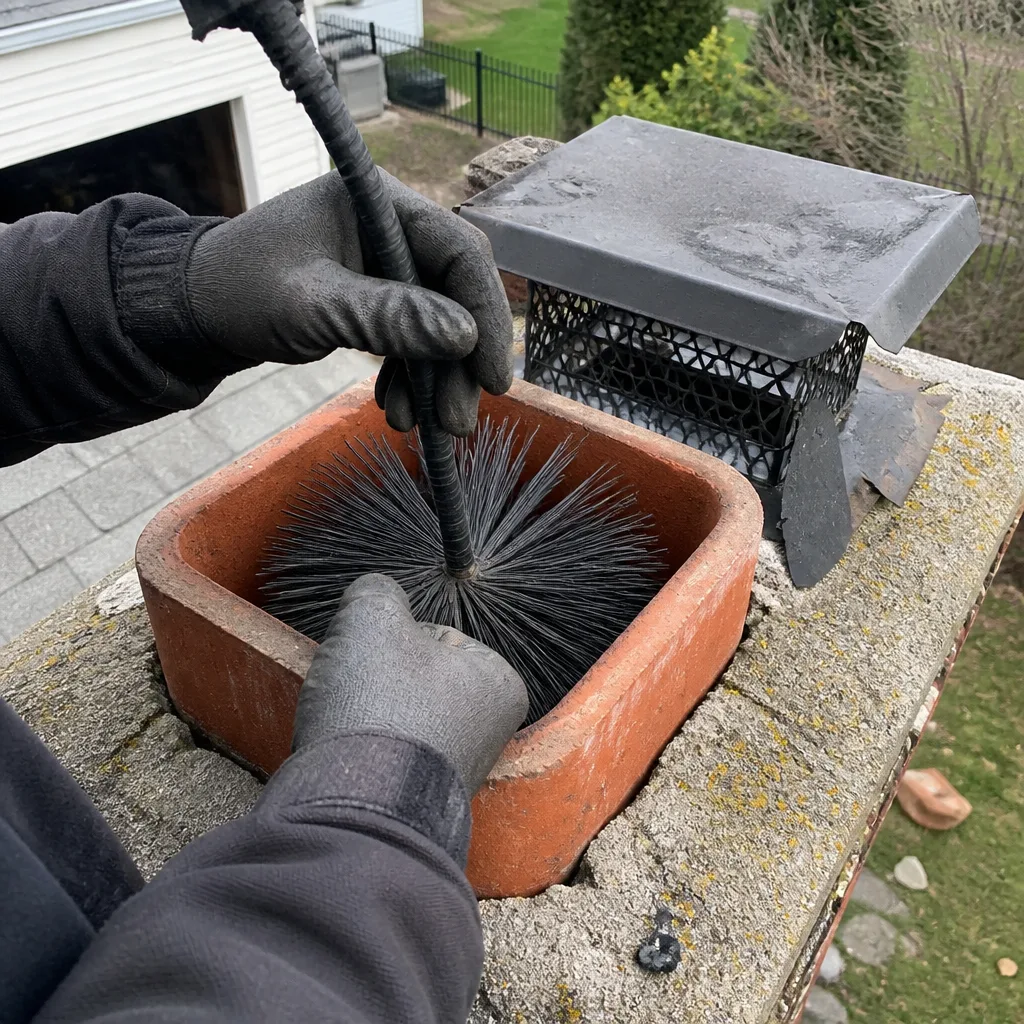
- 1:10-2:00 - Cleaning execution (standard sweep). For routine Class I or II creosote, we deploy appropriately sized brushes on flexible rods, working from top down or bottom up depending on access and appliance configuration. Vacuum capture runs continuously. For metal liners, we use DuraFlex-compatible poly brushes. For clay tile in good condition, standard wire bristle. For Class III glaze, we apply HeatShield or Gelco chemical treatment to soften deposits before mechanical removal - this extends the visit and is priced separately.
- 2:00-2:20 - Smoke chamber and firebox cleaning. Often overlooked by cut-rate sweeps, the smoke chamber (the area above the damper that funnels smoke into the flue) accumulates significant creosote and requires hand brushing and vacuuming. We inspect the damper mechanism for proper operation and seal.
- 2:20-2:40 - Post-cleaning verification scan. Camera re-enters to confirm flue is clear to liner surface, document any features exposed by cleaning, and verify no damage occurred during the process. This is your proof of completion.
- 2:40-3:00 - Documentation delivery and departure. Final written record assembled: pre- and post-cleaning camera images, scope description, final price, warranty with 365-Day Done Right Promise, and next-service recommendation. Digital copy emailed; physical copy provided if requested.
Total time: 2.5-3 hours for a thorough, documented service. Cut-rate sweeps advertise 45 minutes. They’re skipping steps 2, 3, 5 (partial), 7, and 8. You’re paying less and receiving substantially less - including the documentation that protects your home value and safety.
How to Read a Post-Cleaning Report So You Know the Job Is Finished
The report you receive after a proper chimney cleaning should answer three questions without ambiguity: What did the flue look like before? What does it look like now? What, if anything, needs attention before the next burning season? Here’s how to evaluate whether your documentation meets that standard.
Pre-cleaning camera images. Look for timestamped, position-marked stills showing the full flue length. Each image should indicate approximate height (e.g., “12 feet from firebox,” “at smoke chamber transition”). You should see liner material clearly: terracotta’s orange-brown color and rectangular joints, or stainless steel’s reflective surface and spiral seams. Creosote should be visible as black or brown deposits, with notation of class (I: powdery soot; II: granular or flaky; III: glazed, hardened, tar-like). If your report lacks position markers or shows only the bottom two feet of flue, the scan was incomplete.
Written condition assessment. Beyond images, the report should describe liner integrity (sound, cracked, spalled, shifted), joint condition (tight, open, deteriorated), smoke chamber status (smooth parged, corbeled brick, deteriorated), and damper operation. Trade terms should appear with plain definitions: “spalling - flaking of the clay surface due to thermal stress or moisture” rather than unexplained jargon. At Emberly Chimney Cleaners, we write these assessments as we’d explain them to a homeowner standing at the hearth: specific, visual, actionable.
Post-cleaning verification images. These should show the same flue positions as the pre-cleaning shots, with deposits removed to bare liner. For terracotta, you’ll see the tile surface and mortar joints clearly. For stainless, the metal should be visible without significant black residue. If the post-cleaning images are missing, or show only the firebox and not the flue, the verification scan was skipped.
Scope and pricing documentation. Haven Standard Clause 1 requires a written price before work starts; the final record should match or explain any deviation. The scope describes what was done: “Standard sweep with rotary cleaning of Class II deposits, smoke chamber hand-brushing, damper lubrication and seal check.” If additional work was recommended but deferred, it should be listed with priority level and estimated timeline: “Liner joint separation at 18 feet - monitor annually, recommend relining within 2-3 burning seasons.”
Warranty and service recommendation. The 365-Day Done Right Promise should be stated explicitly: if any aspect of the documented scope proves incomplete or defective within one year, we return to correct it at no charge. The next-service recommendation should be specific, not generic: “Annual sweep recommended given 1.5 cord annual wood consumption and Class II buildup pattern,” or “Biennial inspection sufficient with gas log set and minimal use.”
Reports that read like invoices - “Chimney sweep: $199” with no images, no condition detail, no warranty language - are not documentation. They’re receipts. The difference matters when you sell your Collegeville home, file an insurance claim, or need to compare competing recommendations.
What a Written Cleaning Record Protects You From
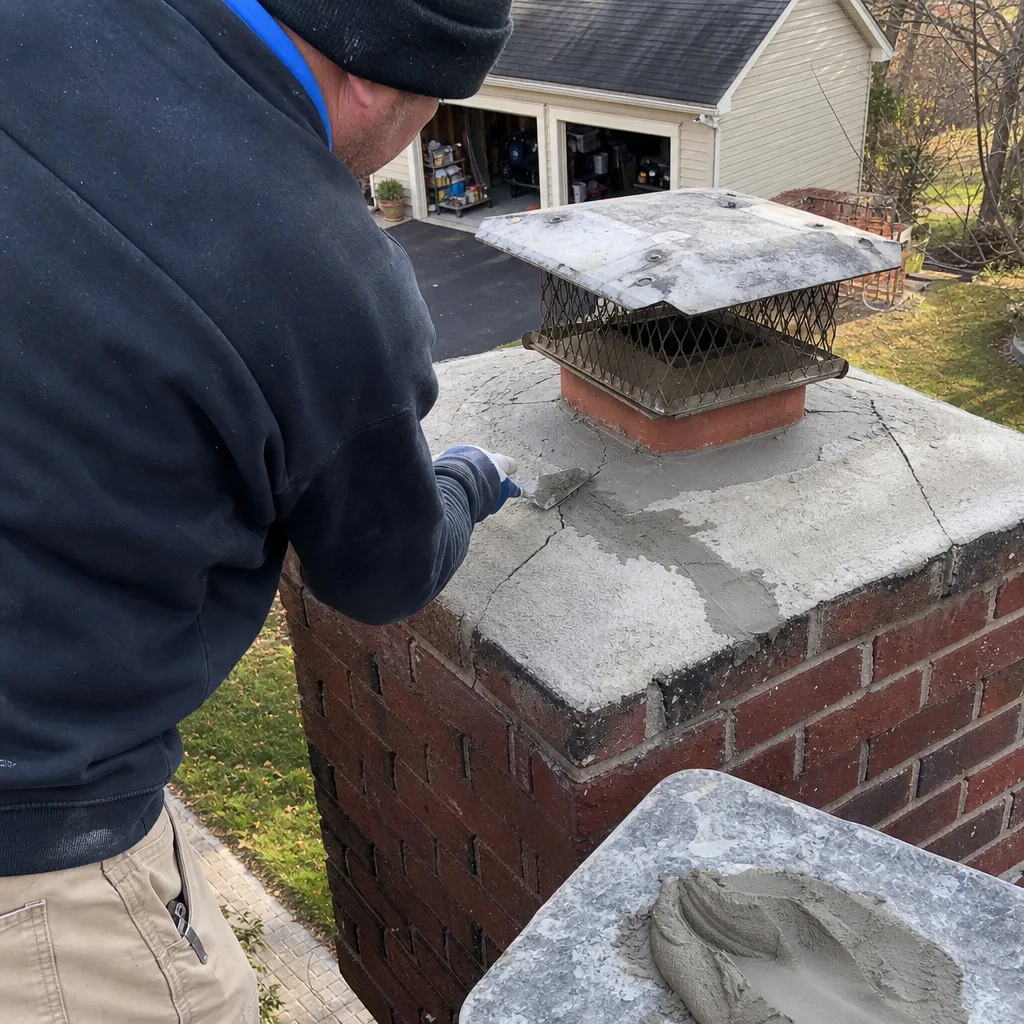
Documentation isn’t bureaucracy. It’s the evidence trail that protects your financial and legal interests in three common scenarios.
Home sale transactions. Montgomery County buyers increasingly request chimney inspection records, and insurers may require documentation of recent service before binding homeowner’s policies on older properties. A written cleaning record with camera evidence proves the flue was sound and professionally maintained at a specific date. We’ve provided records to Collegeville-area real estate attorneys and title companies to satisfy disclosure requirements or resolve inspection contingencies. Without documentation, you’re relying on buyer trust - or paying for a rush inspection that may find deferred maintenance you didn’t know about.
Insurance claims after chimney fires or water damage. If a chimney fire occurs, your insurer will investigate whether the flue was properly maintained. A receipt for “chimney sweep” proves payment, not performance. A dated photo record showing pre-fire liner condition, creosote class, and any recommended repairs demonstrates due diligence - or identifies negligence if warnings were ignored. In water damage claims, pre-existing crown or flashing conditions documented in exterior photos clarify whether damage was sudden (covered) or gradual (typically excluded). We’ve written expert letters for claims referencing specific camera timestamps from prior service visits.
Disputes over competing recommendations. The chimney trade has no uniform licensing in Pennsylvania, and recommendation quality varies widely. A competitor’s “urgent” $3,500 liner replacement recommendation is testable against your documented liner condition from six months prior. Our Free Second Opinion service - bring us any competitor’s written estimate - relies on this archive to identify discrepancies, confirm legitimate concerns, or catch unnecessary work. We’ve had Collegeville homeowners save thousands when our camera re-scan showed liner conditions inconsistent with a competitor’s alarmist assessment.
The Haven Standard’s Clause 4 documentation requirement exists because Corrine Halstead saw too many homeowners left without recourse after sweep visits that were, effectively, unverifiable. The photo record turns a service transaction into a accountable, reviewable event.
Chimney Cleaning Costs in Collegeville: What’s Included, What’s Extra
We name prices on the page because “call for a quote” wastes your time and ours. Here’s what chimney cleaning costs in the Collegeville market, with the line-item breakdown that lets you compare apples-to-apples.
| Service | Price Range | What’s Included |
|---|---|---|
| Standard chimney sweep with Level 2 camera inspection | $180-$320 | Pre-cleaning camera scan, written findings, sweep with brushes and vacuum, smoke chamber cleaning, damper check, post-cleaning verification scan, photo record, written warranty |
| Class III glazed creosote removal (chemical + rotary) | $280-$450 additional | HeatShield or Gelco chemical treatment application, dwell time, rotary cleaning with chain or whip system, second verification scan |
| Insert or stove disconnect/reconnect | $75-$150 additional | Safe removal of appliance from hearth, cleaning of appliance flue collar and surrounding flue, reinstallation with proper clearances |
| Multi-flue system (each additional flue) | $140-$260 each | Full Level 2 scan, sweep, and documentation for each separate flue |
| Crown/sealing assessment with written report | $0 (included) | Exterior photo documentation, condition notation, recommendation if repair needed - no charge during sweep visit |
What separates these prices from lower quotes in the Collegeville market is what’s bundled, not hidden. The $99 sweep advertised online typically excludes: the camera inspection (often $150-$200 extra if offered at all), smoke chamber cleaning (skipped entirely), verification scan (never mentioned), written warranty (verbal only), and photo documentation (unavailable). By the time comparable services are added, the “cheap” sweep costs more than our flat rate - and still lacks the archived record.
Materials matter for durability and warranty validity. We source liners and components through DuraFlex, HeatShield, Gelco, Olympia Chimney, Famco, and Copperfield via Haven’s buying network. These aren’t premium upgrades; they’re the standard products we specify because their engineering documentation supports our warranty commitments. A liner installed with off-brand materials may cost less upfront but voids the 365-Day Done Right Promise and often lacks the UL listing insurers require.
Payment timing: We deliver the written price before work starts, as Haven Standard Clause 1 requires. You approve or decline. If you decline, you pay only the diagnostic fee ($85) for the camera scan and written findings - still documented, still yours to keep for second opinions. No pressure, no surprise invoices.
Common Mistakes to Avoid
- Hiring based on price alone without comparing scope. The $99 sweep skips the camera, skips the smoke chamber, skips documentation. In Collegeville’s older housing stock, that means missing liner damage that could cost you thousands in preventable repairs or, in worst cases, a chimney fire. Compare line items, not bottom lines.
- Assuming annual sweeping means annual inspection. Many homeowners book “a sweep” every fall and assume the flue was inspected. If the company doesn’t run a camera, you got cleaning without assessment. The two are related but distinct services. Insist on both, documented.
- Ignoring the smoke chamber. The smoke chamber is the most overlooked fire risk in residential chimneys. It’s not visible from the firebox without a mirror or camera, and it’s where many chimney fires originate. A proper sweep includes hand-brushing and inspection of this area; if your sweep never mentions it, they probably didn’t address it.
- Deferring recommended repairs without understanding timeline. Not every liner crack requires immediate relining. Some conditions can be monitored annually. But you need the camera evidence and a written priority assessment to make that judgment. “We’ll keep an eye on it” from a sweep who never ran a camera is not a plan.
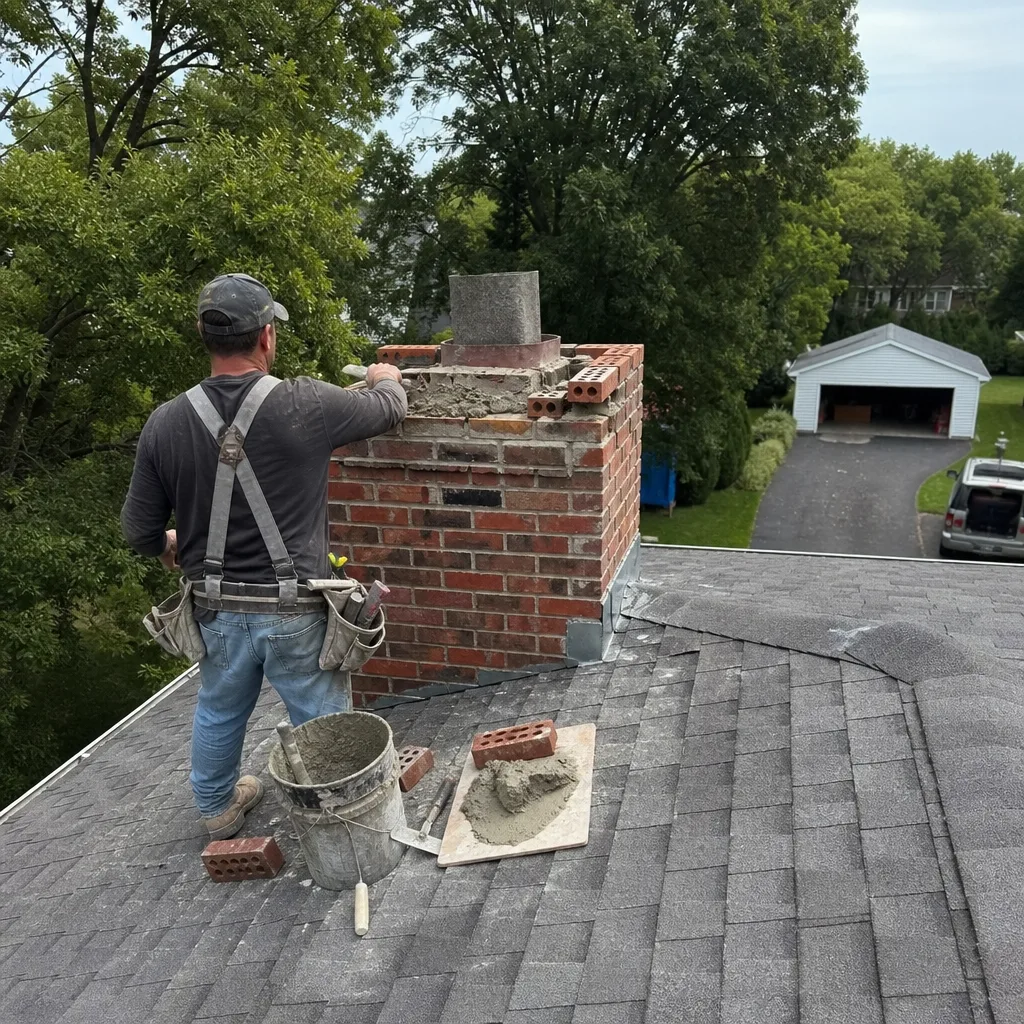
- Neglecting exterior maintenance between sweeps. Collegeville’s freeze-thaw cycles and oak canopy accelerate crown and cap deterioration. Annual visual checks from the ground - looking for missing mortar, crown cracks, or cap displacement - catch problems before water enters and damages the liner you just paid to protect.
- Failing to request documentation for insurance or sale. Even if you’re not selling now, maintain your service records. Chimney documentation has a 10-15 year relevance window for disclosure and claims purposes. Digital copies from Emberly Chimney Cleaners are archived indefinitely; if you used a company that doesn’t provide them, that evidence is gone.
- Using the wrong fuel for your system. Burn only seasoned hardwood (under 20% moisture) in wood-burning fireplaces and stoves. Burning unseasoned wood, construction debris, or wrapping paper in Collegeville’s older flues accelerates creosote formation and can overheat terracotta liners beyond their design limits. The camera scan shows the consequences; prevention is cheaper than repair.
When to Call a Professional
Some conditions require immediate professional assessment; others can wait for your scheduled maintenance. Call for service if you notice: visible creosote flakes in the firebox, a strong smoky odor when the fireplace isn’t in use, draft problems or smoke spillage into the room, water stains on walls or ceiling near the chimney, or any cracking sounds or unusual heat from the chimney structure during use. These symptoms indicate active problems that camera inspection can diagnose before they escalate to chimney fire or carbon monoxide intrusion.
For routine maintenance, schedule before the burning season begins - ideally late summer or early fall in Collegeville, before the October temperature drop drives appointment demand. See our seasonal chimney cleaning care guide for year-round timing tips. Annual service is standard for wood-burning systems; gas fireplaces and inserts typically need biennial inspection with less frequent cleaning.
Emberly Chimney Cleaners Collegeville offers free estimates in Collegeville - call (610) 884-0366. Every estimate includes the camera scan, written findings, and flat-price quote before any work commitment. If you have a competitor’s written estimate, our Free Second Opinion will verify or correct their assessment against our documented inspection.
Frequently Asked Questions
A professional chimney sweep with Level 2 camera inspection in Collegeville typically runs $180-$320 for a standard single-flue masonry fireplace. For help weighing service options, read our DIY vs Professional Chimney Cleaning: The Collegeville Homeowner’s Decision Guide. Class III glazed creosote, insert disconnect/reconnect, or multi-flue systems add to that base. We deliver a written, flat price before any work starts - no “call for a quote” games. Call (610) 884-0366 for an exact quote; estimates are free.
Wood-burning fireplaces and stoves should be swept annually, or after every cord of wood burned, whichever comes first. In Collegeville’s market with heavy oak and maple burning, many households hit that threshold mid-season. Gas systems need inspection every two years with cleaning as needed based on debris or venting issues. The NFPA 211 standard specifies inspection frequency; cleaning follows from what the inspection finds.
You shouldn’t accept or reject a liner recommendation without camera evidence you can see for yourself. A cracked or deteriorated liner is a legitimate safety concern - it can allow heat and combustion gases into wall cavities, and it’s required for insurance compliance on most policies. But the condition must be documented, not asserted. At Emberly Chimney Cleaners, we show you the camera footage, explain the failure mode, and provide a written scope with alternatives where they exist (monitoring vs. immediate replacement, partial vs. full relining). Our Free Second Opinion on any competitor’s written estimate exists precisely for this concern. Call (610) 884-0366 if you’ve received a liner recommendation without documented proof.
Skipped cleaning allows creosote accumulation, which restricts flue airflow and increases the risk of chimney fire - a fast, hot burn that can crack liners, damage masonry, and spread to structural framing. In Collegeville’s older homes with balloon framing or minimal firestopping, that spread risk is elevated. Additionally, blocked or restricted flues can force carbon monoxide back into living spaces. The camera inspection that accompanies proper cleaning catches these conditions before they become emergencies. Annual service is cheap insurance against catastrophic outcomes.
A Level 1 inspection is a visual check of readily accessible portions - what you can see from the hearth or roof without special equipment. A Level 2 inspection requires internal examination of the flue liner, smoke chamber, and accessible structural components, typically using video scanning equipment. Level 2 is the minimum appropriate assessment before cleaning, before home sale, after chimney fire or seismic event, or upon change of appliance. Most “free inspections” offered by sweep companies are Level 1 assessments dressed up in marketing language. We perform Level 2 camera scans on every visit as standard practice, not as an upgrade.
We don’t recommend DIY chimney cleaning for most homeowners, and we won’t provide step-by-step instructions for work that involves roof access, confined flue entry, and evaluation of structural conditions. The physical risks - falls from roof or ladder, exposure to carcinogenic creosote dust, accidental liner damage from improper brush selection - are significant. More importantly, without camera equipment and training, you cannot assess liner condition or creosote class accurately. What looks like “a little soot” from the firebox may be Class III glaze or cracked tile three courses up. Professional service includes documentation that protects your insurance coverage and home value; DIY cleaning provides neither. For Chimney Repair in Collegeville or cleaning, professional assessment is the safer and more cost-effective path.
A complete report contains: timestamped pre-cleaning camera images with position markers showing full flue length; written condition assessment with trade terms defined in plain language; post-cleaning verification images at matching positions; detailed scope of work performed; flat price paid; warranty terms (our 365-Day Done Right Promise); and specific next-service recommendation with timeline. Reports that are simply invoices with a single line item - “Chimney sweep: $X” - fail this standard and leave you without recourse for disputes or insurance claims.
The Bottom Line
A proper chimney cleaning in Collegeville is four sequential events: camera scan, written findings with priced scope, cleaning execution, and documented verification. Skip any step and you’ve bought a partial service with unquantified risk. The camera-first workflow catches the conditions - cracked terracotta, Class III creosote, smoke chamber deterioration - that change both safety and cost. The written record protects your investment when you sell, claim, or dispute. And the flat-price-before-work standard eliminates the post-visit invoice shock that defines the low-end market.
Emberly Chimney Cleaners has operated under the Haven Standard since 2009, completing more than 38,000 inspections and cleanings with written prices before work and photo records after. In Collegeville’s older housing market, that documentation isn’t a luxury. It’s the minimum due diligence that responsible homeownership requires.
For Fireplace Services in Collegeville, chimney repair, or a free estimate on cleaning, call (610) 884-0366. A live person answers 24 hours a day. We’ll run the camera, show you what we find, and give you a written price before any work begins. That’s Haven Standard Clause 1. It’s how we’ve operated since 2009, and it’s not changing.
Written by Corrine Halstead, Owner at Emberly Chimney Cleaners Collegeville, serving Collegeville since 2009.