
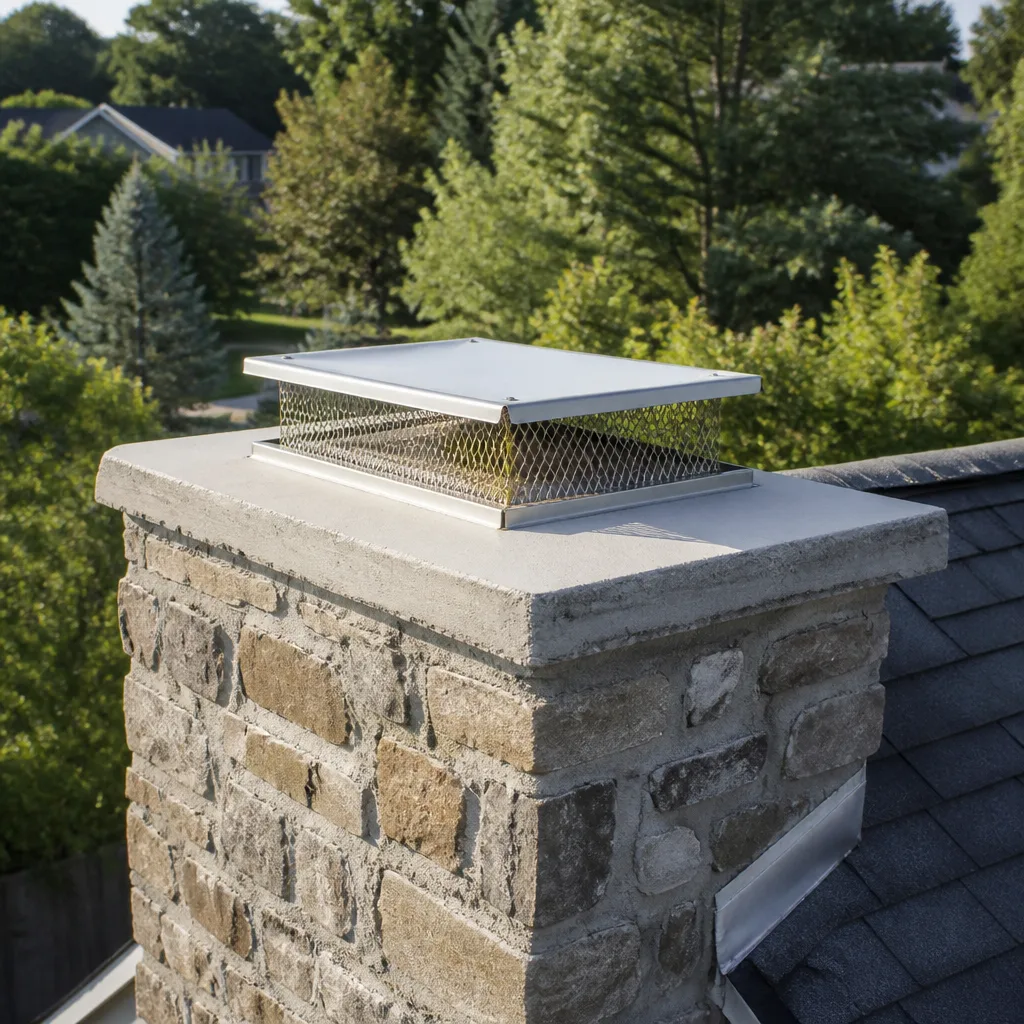
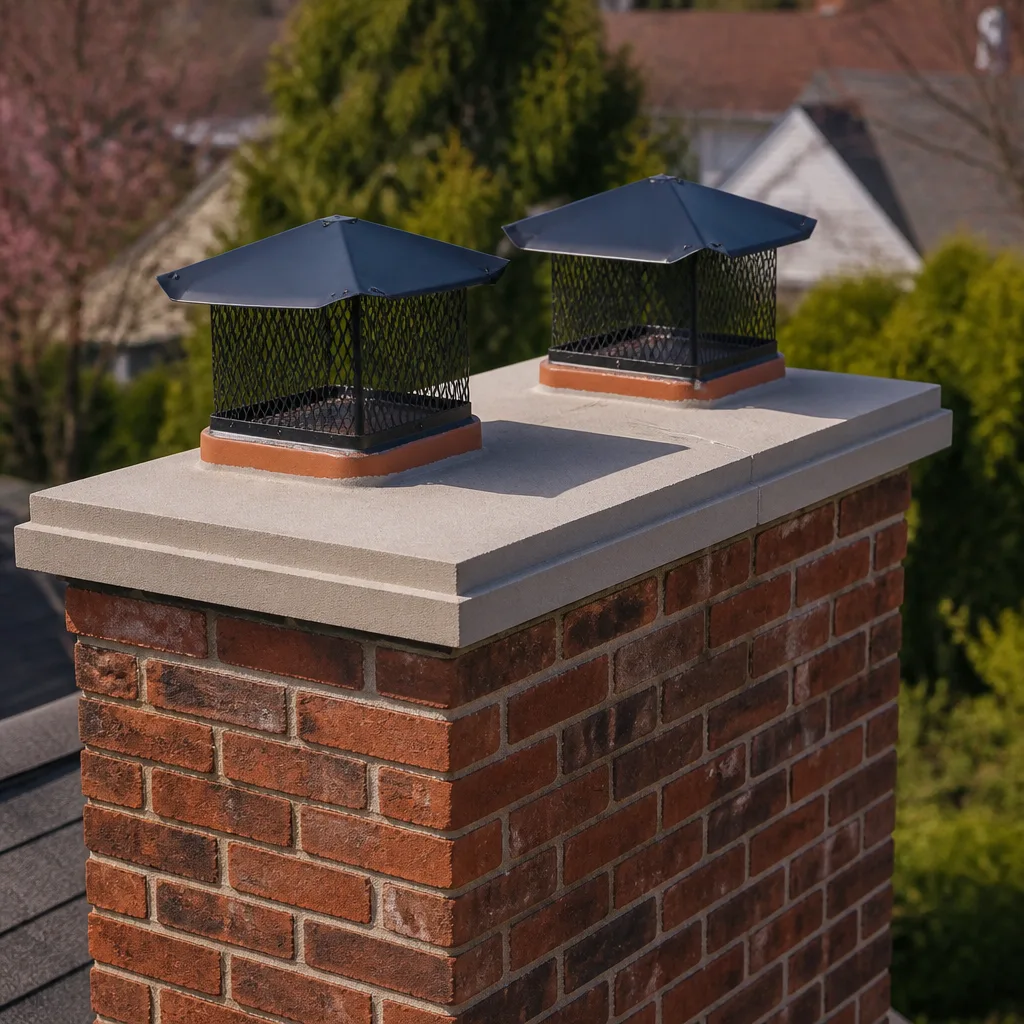
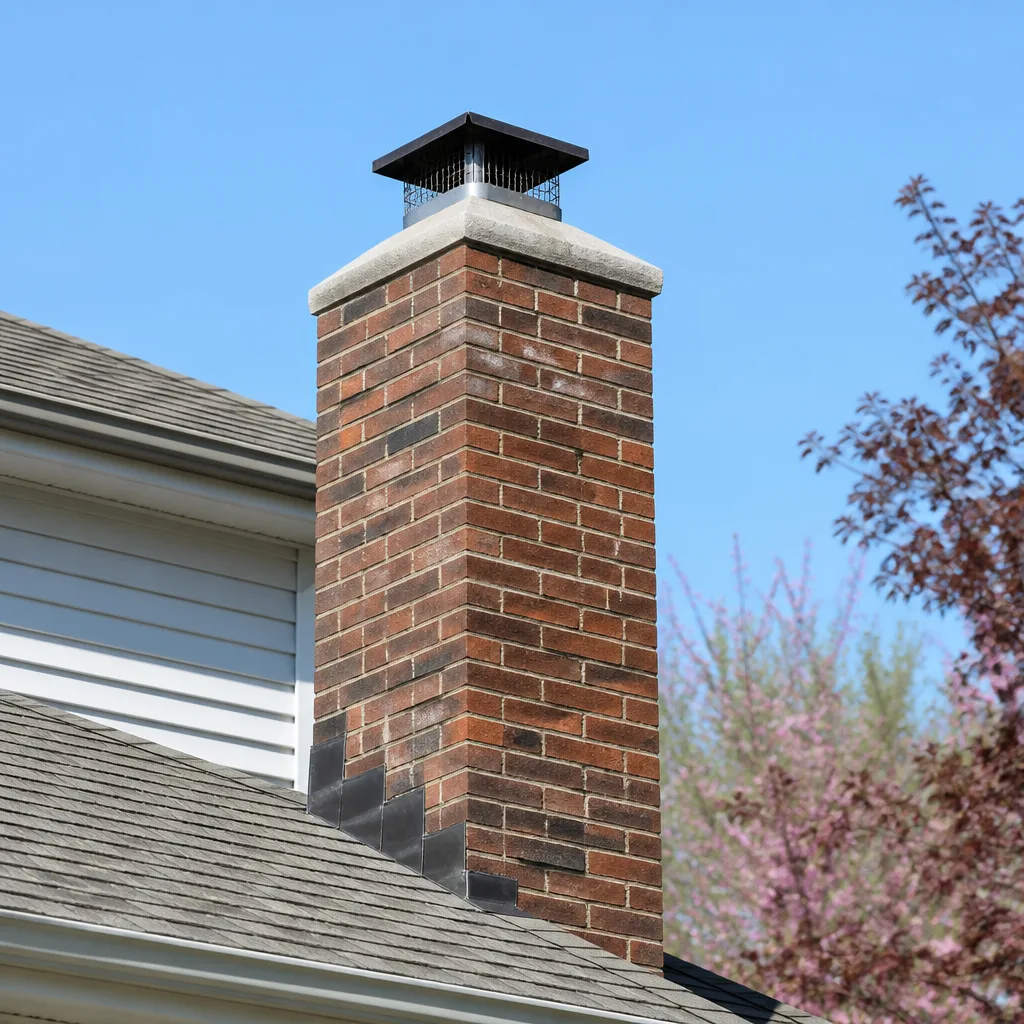
Level 1 sweep and inspection to the NFPA 211 annual standard - flue, crown, cap, and flashing checked and photographed
Chimney sweep logs do not sweep chimneys. They loosen some creosote - which then falls where a brush and vacuum still have to collect it.
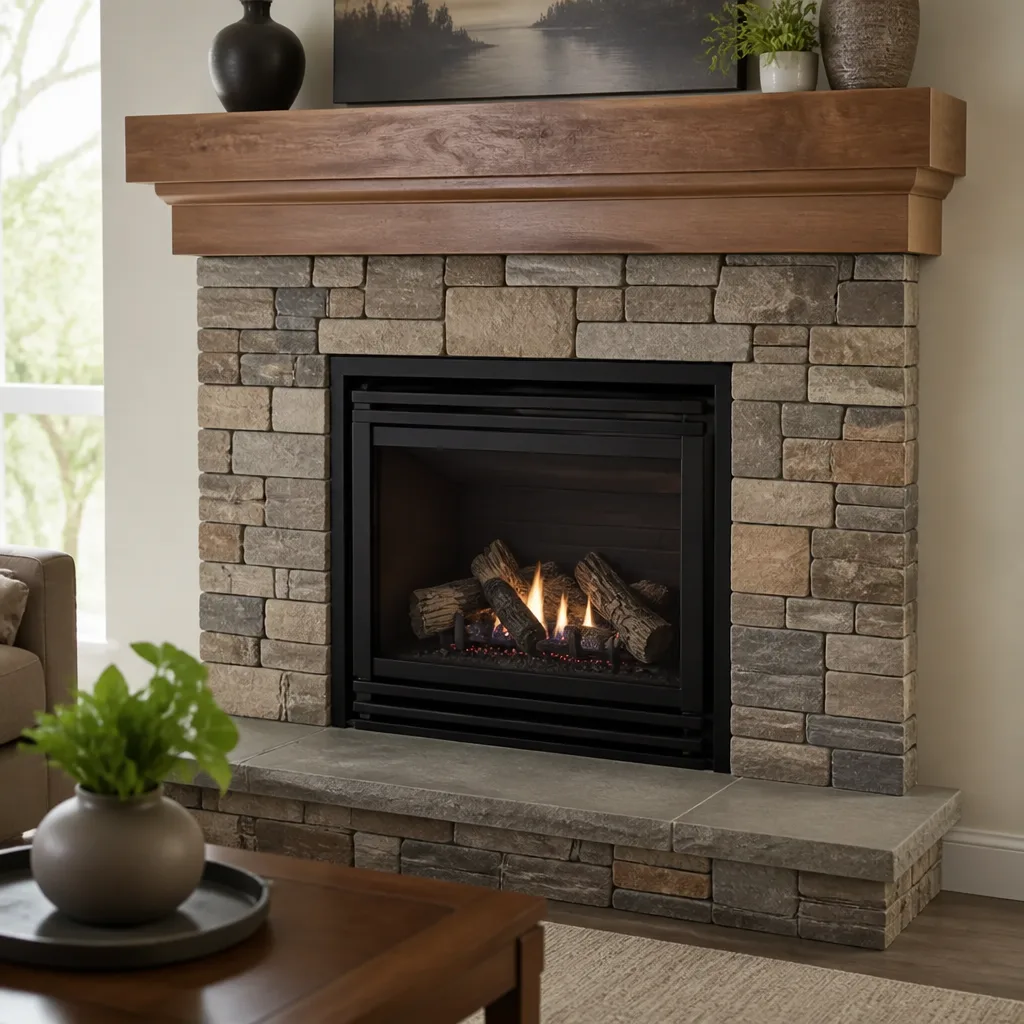
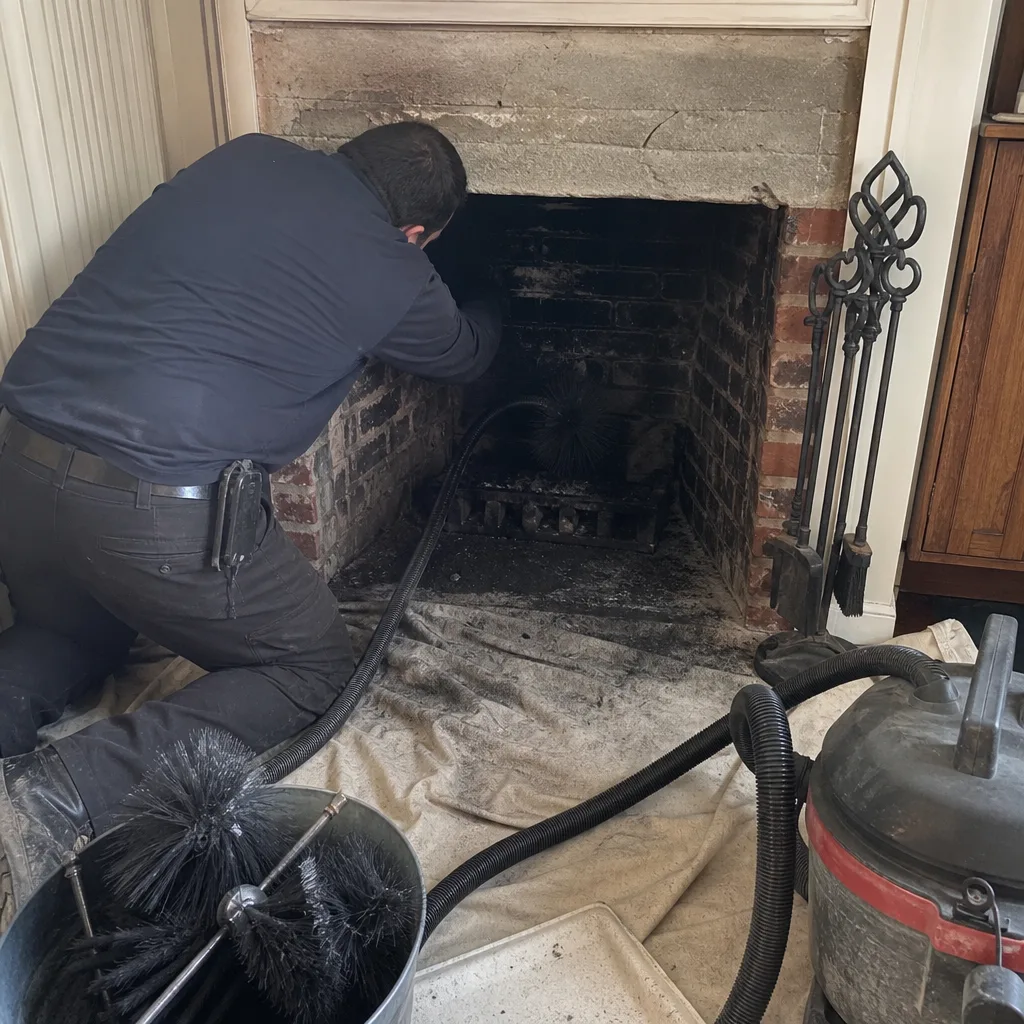 Before
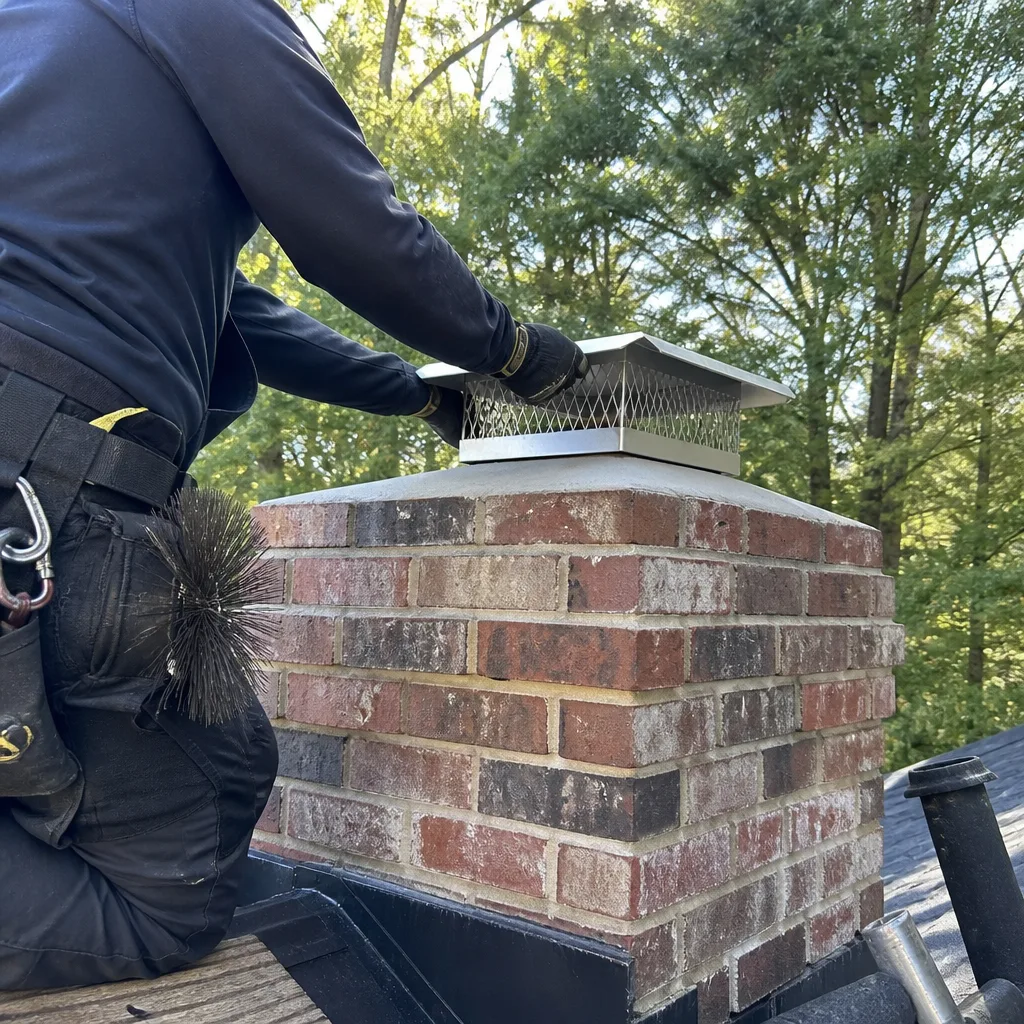 After
After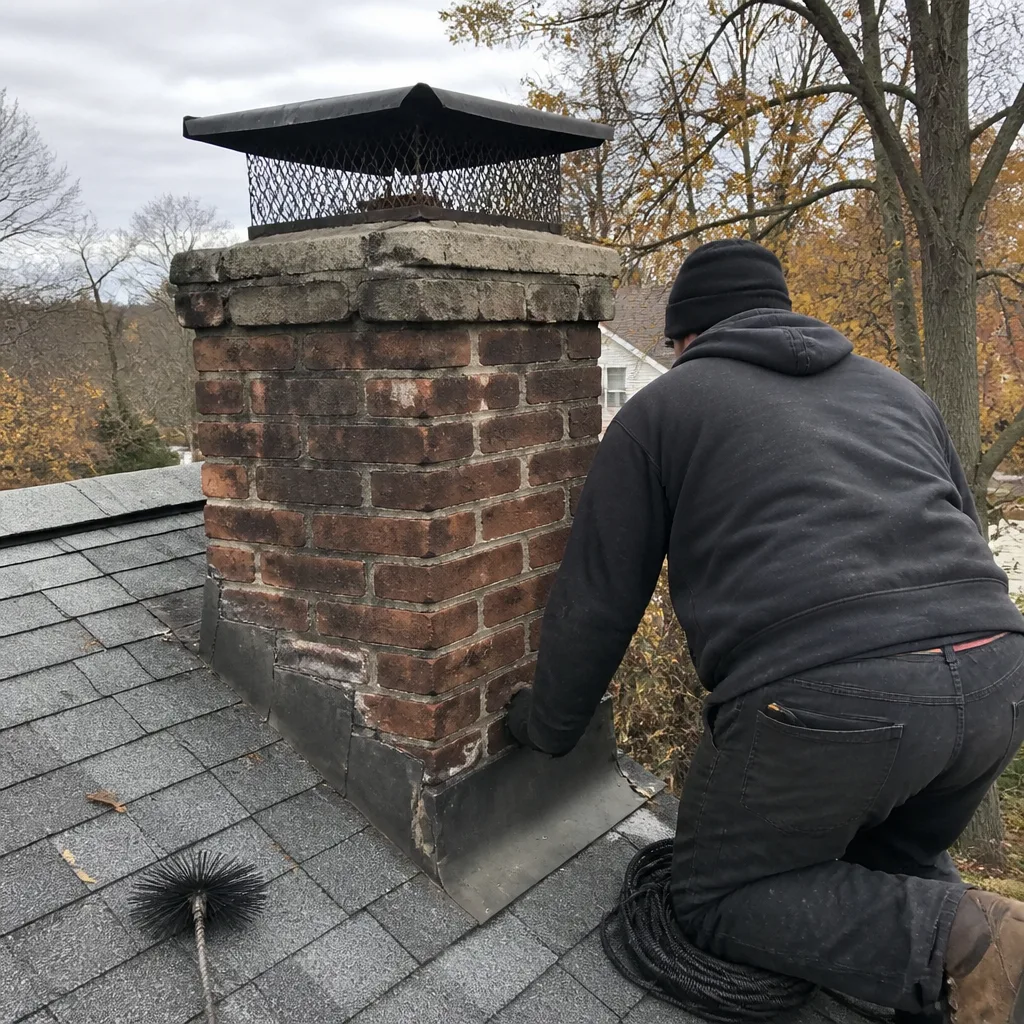 Before
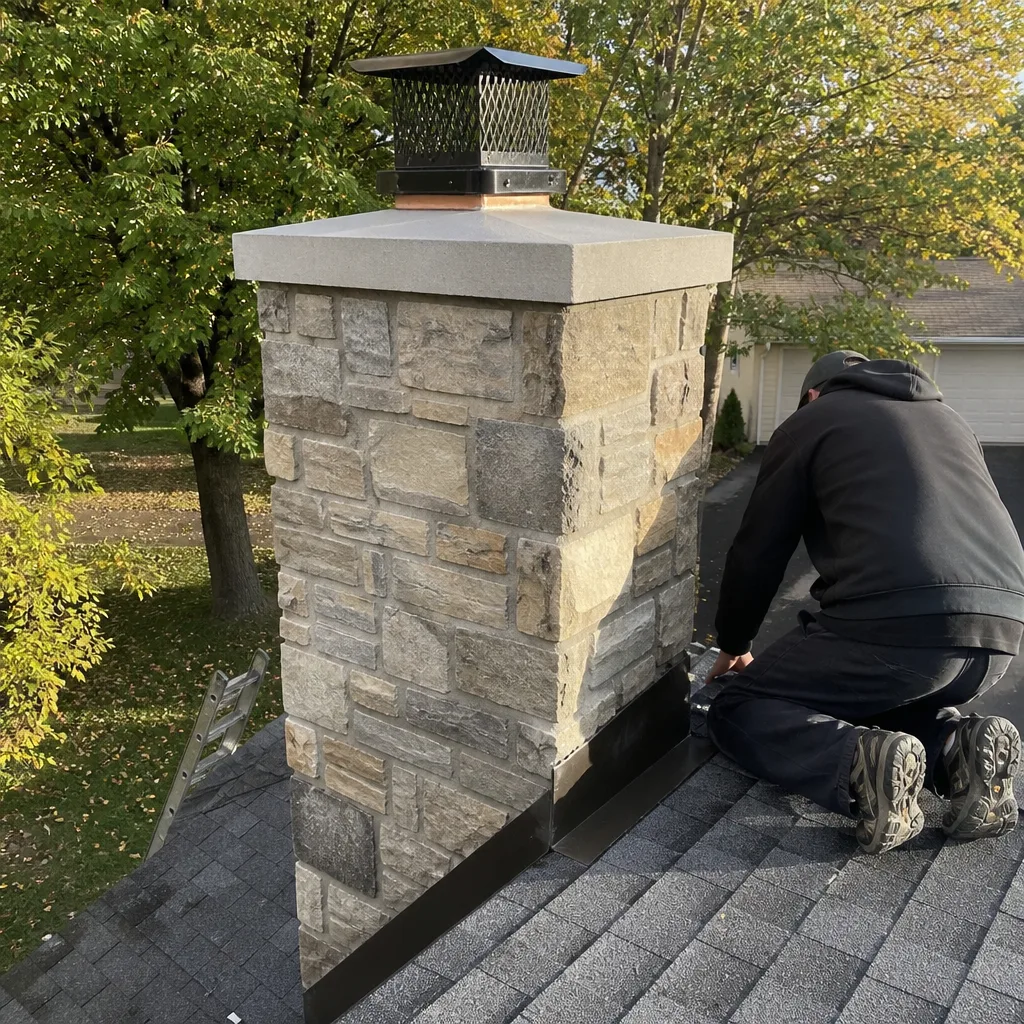 After
After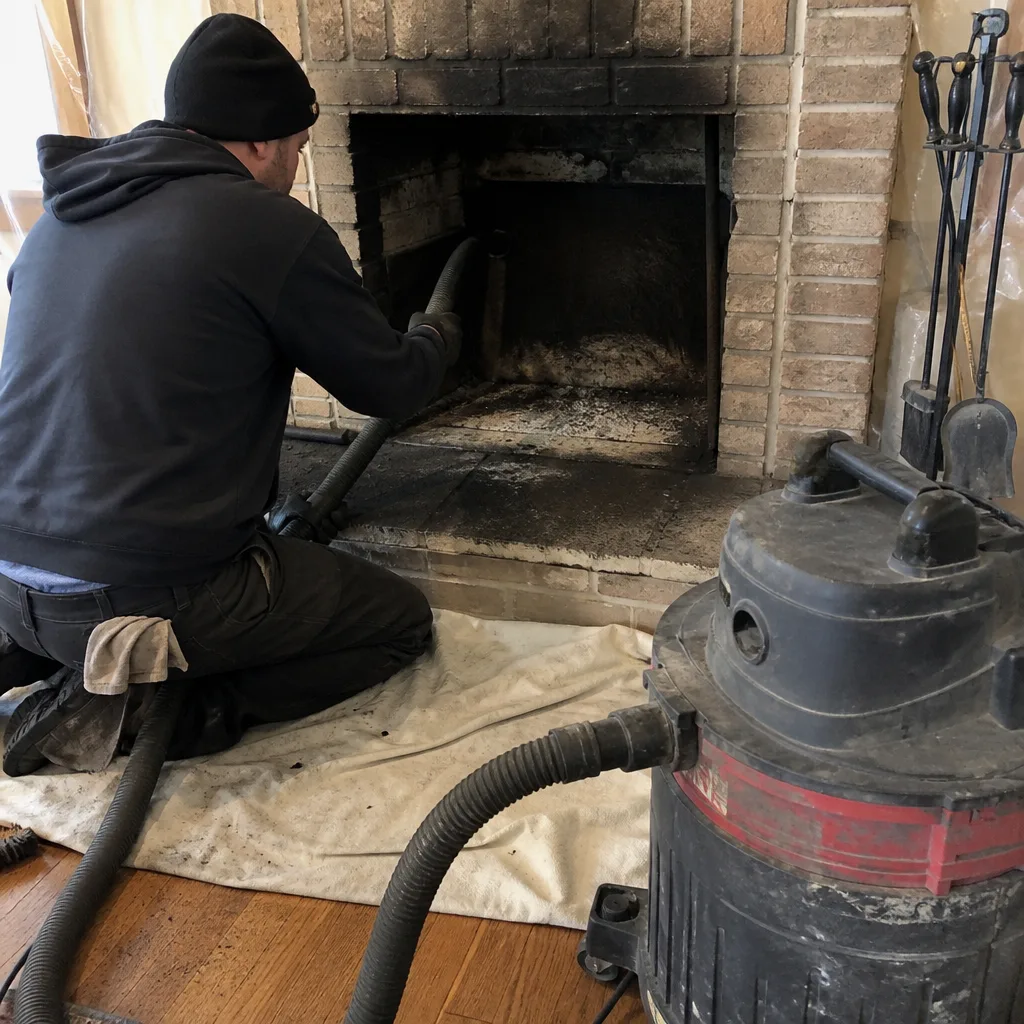 Before
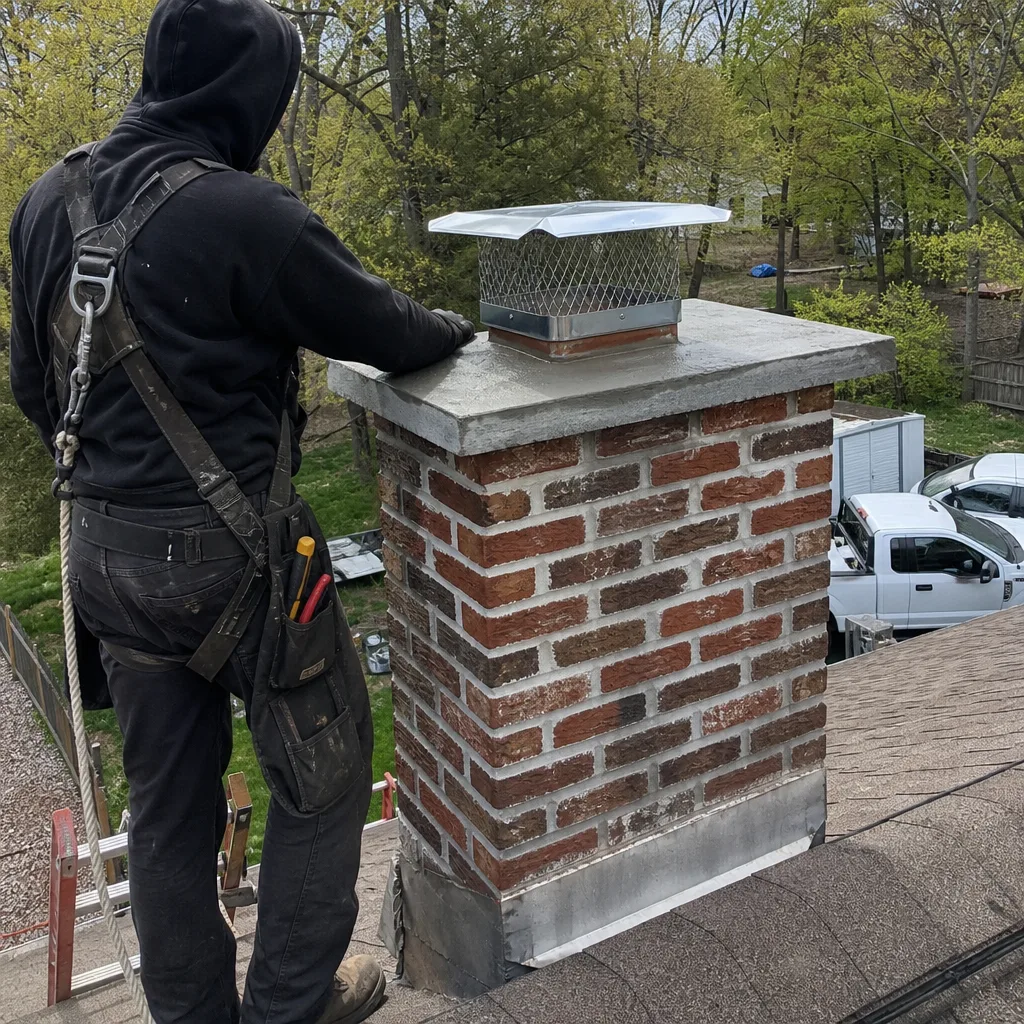 After
AfterCreosote Removal in Collegeville, PA
Creosote removal in Collegeville typically runs between $150 and $800 depending on the class of buildup, flue length, and whether rotary cleaning tools or chemical treatments are required. Most standard Class I and Class II cleanings are completed in a single visit. Class III glazed creosote takes longer and almost always costs more – we’ll tell you exactly what you’re looking at before any work starts.
If you’ve noticed a sharp, tarry smell from your fireplace, a black oily residue around the firebox, or smoke backing into the room, you likely have a creosote problem worth addressing now rather than later. Creosote is the primary fuel in chimney fires – the NFPA reports that chimney fires account for tens of thousands of residential structure fires each year, and the majority trace back to ignited creosote deposits.
At Emberly Chimney Cleaners Collegeville, we’ve inspected and cleaned more than 38,000 chimneys since 2009. Every one of those jobs started with a camera scan and a written price. Creosote removal is no exception. Before we touch a brush or a rotary drill, you’ll have a written scope, a written price, and a written warranty in hand – that’s Haven Standard Clause 1, and it’s how we’ve operated from the start. To schedule or ask a question, call us at (610) 884-0366 – a live person answers, any hour of any day.
Creosote removal falls under our broader Chimney Sweep in Collegeville service, but it warrants its own page because the process, the risk level, and the cost vary significantly depending on which class of creosote is present. A homeowner dealing with flaky, dusty Class I deposits has a different situation than someone with thick, tarry Class III glazing – and conflating the two does nobody any good.
When You Need Creosote Removal
- You smell something sharp or chemical when the fireplace is running. That acrid, almost asphalt-like odor is a reliable signal that creosote has built up past the point where normal draft carries it out. In Collegeville’s colder months – especially when temperatures drop fast in November and residents start burning wood before the flue is fully warm – incomplete combustion accelerates this buildup considerably.
- You see black, oily residue around the firebox opening or on the damper. Residue that smears rather than dusts off is Class II creosote at minimum. Class I is powdery and gray-brown. The smear test tells you more than a visual glance.
- Your camera scan shows more than 1/8-inch of buildup on the flue liner wall. The NFPA 211 standard uses that figure as the threshold for mandatory cleaning. Our Level 2 inspection catches this because we send the camera down the flue on every visit – not a flashlight glance from the top.
- You haven’t had the chimney cleaned in more than a year and burned more than a cord of wood. A single cord of mixed hardwood can deposit enough creosote to require professional removal if the fire isn’t burning hot enough. This is especially common in older Collegeville homes where original fireboxes have narrower flue openings that restrict airflow.
- You’ve noticed smoke puffing back into the room during cold starts. A restricted flue – often caused by creosote narrowing the interior diameter – creates back-pressure. The smoke goes somewhere; if the draft is weak, it comes toward you.
- Your home insurance renewal is coming up and they’ve asked for a recent cleaning record. Insurers in Pennsylvania increasingly request documented proof of chimney cleaning, and a photo record from a Level 2 inspection is exactly what satisfies that request. We document every job under Haven Standard Clause 4.
Our Creosote Removal Process
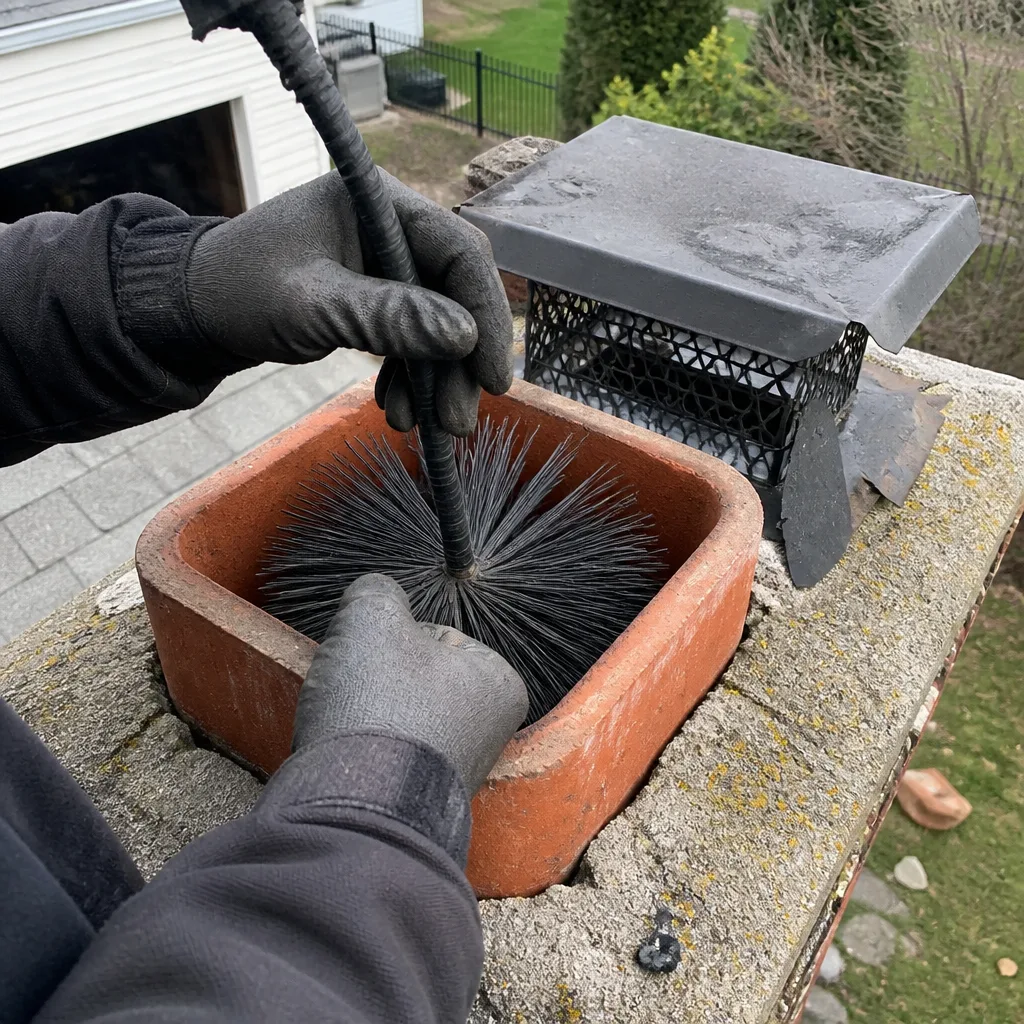
- Camera-down inspection before any cleaning begins. We run a camera down the flue liner before we pick up a brush. This tells us the class of creosote present, the condition of the liner itself, and whether there are any cracks or obstructions that would change the cleaning method. You see what we see – the footage belongs to your documented record. A written price follows immediately after, not after we’ve already started work.
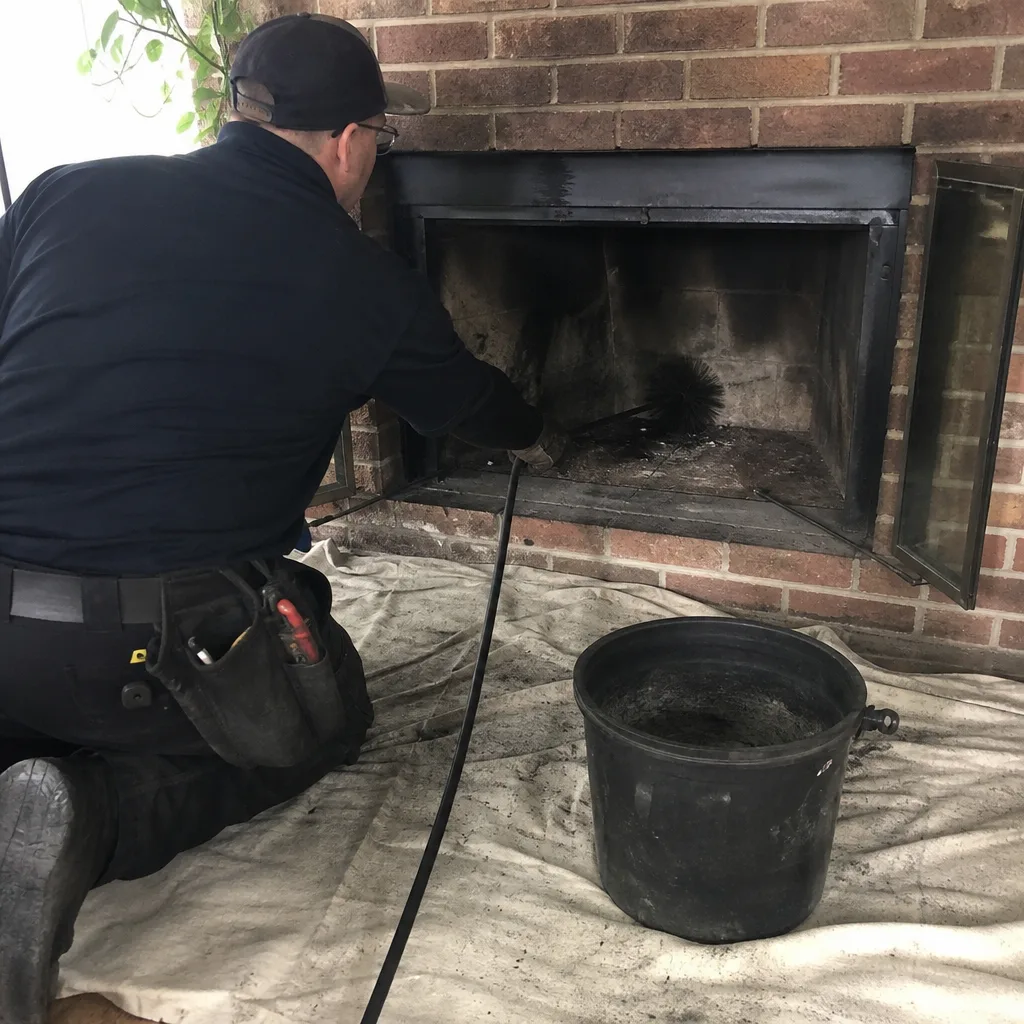
- Containment setup in the firebox and living space. We seal the firebox opening with a drop cloth and create negative pressure where possible to keep dust and debris from migrating into your home. For homes in Collegeville’s older neighborhoods – particularly the historic properties near Fourth Avenue and the Perkiomen Creek corridor, where original stone fireboxes can be irregular in shape – this step takes extra care because the opening geometry isn’t always standard.
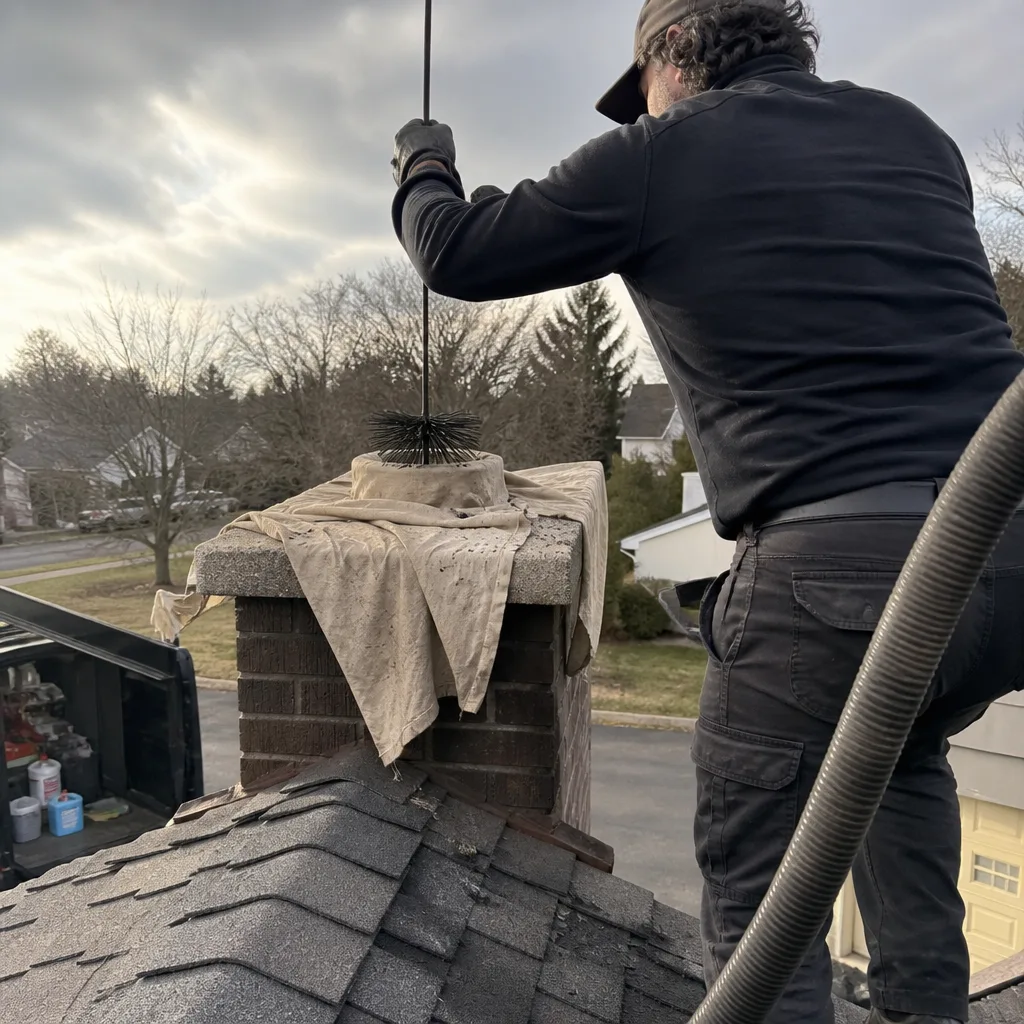
- Mechanical brushing for Class I and Class II deposits. Standard rotary and wire brush equipment removes flaky and tar-like deposits from the flue walls. We work from the top down, pushing debris into the firebox and then removing it completely. The tools we use are sized to your specific flue diameter – a 6-inch liner gets different tooling than an 8-inch one.
- Chemical treatment for Class III glazed creosote. Hard, glazed Class III creosote – the black, shiny type that bonds to liner surfaces – does not respond to brushing alone. We apply a chemical poultice specifically formulated to break down the glaze, which is then removed mechanically on a follow-up visit once it has converted to a brushable consistency. This is a two-visit process, and we tell you that upfront. Products from Copperfield’s professional supply line are part of our standard chemical treatment inventory. Important safety note: Class III creosote removal involves working near a flue that poses genuine fire risk if disturbed without proper technique. This is not a DIY process – the chemical treatments used require professional handling and a confirmed understanding of your liner’s integrity before application.
- Post-cleaning camera confirmation. After cleaning, the camera goes back down. You get before-and-after images in your documented photo record. If the liner wall shows damage that was hidden under the creosote – spalling, cracking, or mortar joint erosion – we note it in writing and give you a separate written price for any repair, with no obligation to proceed that day.
- Written summary and 365-Day Done Right Promise. When we’re done, you receive a written record of what was found, what was done, what materials were used, and what – if anything – needs follow-up attention. Every creosote removal job at Emberly Chimney Cleaners Collegeville is backed by our 365-Day Done Right Promise: if it’s not right, we come back and make it right.
BeforeAfterCreosote Removal Pricing in Collegeville
Creosote removal in Collegeville runs on a sliding scale based primarily on the class of deposit, the number of flue sections involved, and the method required. Here’s what you can expect:
| Creosote Class | Description | Typical Price Range |
|---|---|---|
| Class I | Dusty, flaky deposit – removed with standard brushing | $150 – $249 |
| Class II | Tar-like, sticky buildup – requires rotary tools | $250 – $450 |
| Class III | Glazed, hardened – two-visit chemical and mechanical process | $500 – $800+ |
| Add: Smoke chamber cleaning | Often carries its own creosote load, especially in older fireboxes | $75 – $150 additional |
These ranges reflect real jobs in the Collegeville market. The Level 1 Inspection camera scan that precedes every cleaning is what allows us to quote a firm written number rather than a “starting at” figure. What affects the final price most is the class of creosote (determined by the pre-cleaning camera scan), the total linear footage of the flue, and whether the smoke chamber and smoke shelf require separate attention – which they often do in homes built before 1980, where original construction didn’t always include a smooth-parged chamber.
We don’t do “call for a quote.” A written price is in your hands before any work begins – Haven Standard Clause 1. If you have a written estimate from another company, bring it to us. We offer a free second opinion on any written estimate, no conditions attached.
To get your exact written price for creosote removal in Collegeville, call (610) 884-0366. Someone answers, every time.
What Affects Creosote Buildup in Collegeville Homes
Collegeville sits in the lower Perkiomen Creek valley, and the local weather pattern matters more than most homeowners realize. Cold air drainage off the surrounding ridgelines means temperatures near the creek corridor can drop 5 to 8 degrees faster than properties on higher ground. A flue that hasn’t warmed up properly before a fire is lit produces far more incomplete combustion – which means more creosote per cord burned.
We also see accelerated buildup in homes where the original fireplace was designed for a different fuel. Many of the older cape cods and colonials in the Trappe and Skippack Road areas were built with Fireplace Cleaning fireboxes sized for coal or a combination of coal and wood. When current owners burn wood – particularly softer species like pine or green-cut hardwood – in a firebox that wasn’t optimized for it, the deposit rate climbs quickly. It’s not the homeowner’s fault; it’s a geometry and combustion physics problem.
Airtight home construction is another factor. Collegeville saw significant new construction and renovation between 2015 and 2023, and a well-sealed modern home doesn’t supply the same passive air volume to the firebox that a drafty older home does. Restricted combustion air slows the burn and raises creosote output. The solution isn’t always to clean more frequently – sometimes it’s adjusting how the fire is built, or addressing the air supply – but cleaning is always the first step.
FAQs – Creosote Removal
How often does creosote need to be removed from a chimney in Collegeville?
Creosote should be removed whenever the buildup reaches 1/8 inch on the flue liner wall – the NFPA 211 threshold – or at minimum Chimney Sweep services once per year if you burn wood regularly. In Collegeville’s climate, where heating seasons run from October through April and many homeowners use their fireplace three or more times per week during that stretch, an annual cleaning before or after the heating season is the practical baseline. If you’re burning green or softwood, or running fires at low smolder rather than hot-burn temperatures, you may need cleaning mid-season as well. The only way to know for certain is a camera scan. Call (610) 884-0366 for a free estimate and we’ll tell you exactly where you stand.
Can I remove creosote myself with a chemical spray?
Over-the-counter creosote-modifying sprays can reduce Class I deposits slightly and may help convert early Class II buildup to a more brushable form, but they are not a substitute for professional removal. They don’t work on Class III glazing, and they do nothing to confirm whether your liner has cracks or damage underneath the deposit. A flue with structural damage that you’ve treated with a spray is no safer than one that was never treated at all – you’ve just made the deposit easier to brush without knowing what’s behind it. For any buildup beyond a thin, powdery Class I layer, a camera-confirmed professional cleaning is the correct approach. We’re happy to show you exactly what we find before and after. Call (610) 884-0366.
What is Class III creosote and why is it more expensive to remove?
Class III creosote is a hardened, glazed deposit that bonds directly to the flue liner surface – it looks like a shiny black coating rather than a powder or a tar smear. It forms when flue gases condense at low temperatures repeatedly over time, creating layers that harden with each thermal cycle. Standard brushing equipment can’t remove it without risking liner damage, so the correct process involves a chemical poultice – applied on the first visit – that converts the glaze to a brushable consistency, followed by mechanical removal on a second visit. That two-visit process, combined with the chemical materials involved, is what drives the higher price range of $500 to $800 or more. We quote the full scope in writing before any treatment begins. Call (610) 884-0366 to get a camera inspection and written price for your specific flue.
Does a chimney fire mean I need full liner replacement?
Not necessarily, but it does mean you need a Level 2 Inspection before the fireplace is used again – and that inspection needs to include a camera scan, not just a visual check from the top. A chimney fire can crack terra cotta liner sections, spall masonry, or damage mortar joints in ways that are invisible to the naked eye from above. If the liner comes back clean on camera with no cracking or displacement, creosote removal and a documented record may be all that’s required. If the camera shows damage, we’ll give you a written repair price – liner relining with a DuraFlex stainless steel liner system is the most common repair we perform after a confirmed chimney fire in this market. Either way, you’ll know exactly what you have before you decide anything. Call (610) 884-0366 and we’ll get the camera down as soon as we can schedule it.
Key Takeaways
- Creosote removal in Collegeville costs $150 to $800+ depending on the class of buildup – a camera scan before cleaning is the only reliable way to quote a firm price.
- Class I and II deposits are typically resolved in a single visit. Class III glazed creosote requires a two-visit chemical and mechanical process.
- Every Emberly Chimney Cleaners Collegeville job starts with a written price (Haven Standard Clause 1) and ends with a documented photo record (Haven Standard Clause 4).
- The 365-Day Done Right Promise applies to every creosote removal job – if it’s not right, we come back and make it right.
- Collegeville’s cold air drainage patterns and housing stock from the pre-1980 era both contribute to above-average creosote accumulation rates – annual inspection is the right baseline for most homeowners here.
- A free second opinion on any written estimate is available, no conditions attached.
Get a Written Price for Creosote Removal in Collegeville
If you’re in Collegeville and you want to know exactly what’s in your flue – not a guess, not a ballpark – call (610) 884-0366. A live person answers around the clock. We’ll schedule a camera-down inspection, give you a written price before any work starts, and leave you with a documented photo record when we’re done. That’s how every job works here, from the first visit to the last.
Corrine Halstead and the Emberly Chimney Cleaners Collegeville team have been doing this since 2009. More than 38,000 chimneys documented. Every single one with a written price before the first brush stroke. Yours will be no different.
Written by Corrine Halstead, Owner at Emberly Chimney Cleaners Collegeville, serving Collegeville.